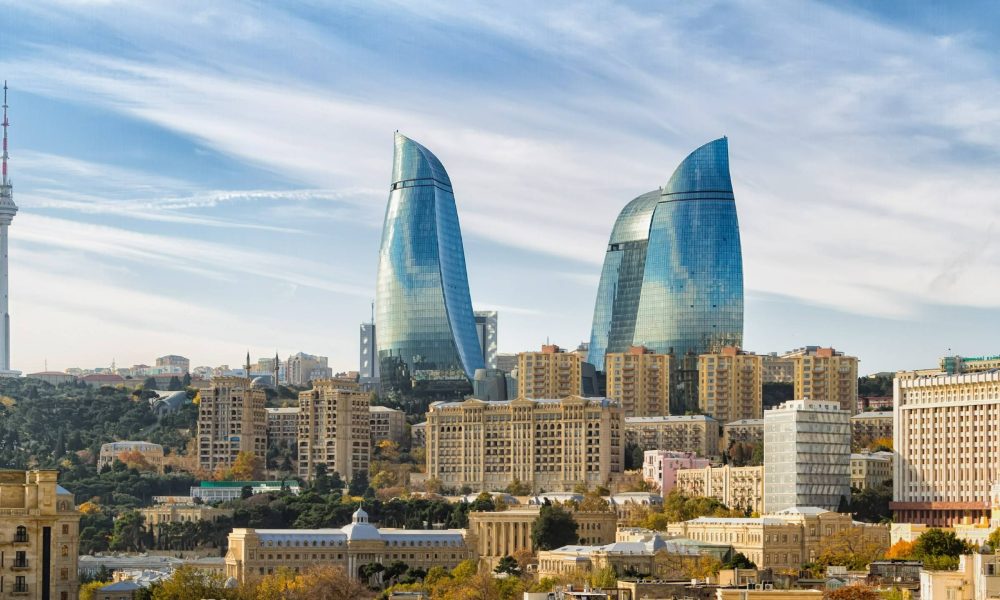
Azerbaijan’s partnerships with several European states reveal crucial factors about the country’s broader foreign policy approach and status. Over the past six months, several developments have further strengthened the recognition of the country’s role in Europe’s geopolitical landscape. This includes ties with the European Union, particularly the European Commission, with Ursula von der Leyen’s trip to Baku in early July signalling a much-needed change in tone from the EU’s political leadership, directed at the recognition of Azerbaijan’s evolving regional status. Simultaneously, a range of individual European countries have shown considerable political will and interest in strengthening institutional ties with the country, reaffirming its rising strategic weight for the European continent. Crucially, however, it demonstrates a widely accepted reality – Azerbaijan has succeeded in implementing a highly effective foreign policy, guided by a clear strategy aligned with national interests and grounded in a consistent commitment to international law. Its constantly widening range of partnerships is one of the strongest indicators of this reality, writes Huseyn Sultanli, Advisor at the Center for Analysis of International Relations and Multiculturalism (AIR Center).
Renewed momentum – European partners approach Azerbaijan
In 2026 alone, the President of Azerbaijan, Ilham Aliyev, has held important meetings with the leaders of several key European actors. This includes Italian Prime Minister Giorgia Meloni during her visit to Baku in May 2026, Slovak President Peter Pellegrini during his visit to Azerbaijan in July 2026, and, most recently, both German President Frank-Walter Steinmeier and Chancellor Friedrich Merz during President Ilham Aliyev’s state visit to Berlin also in July 2026. Each of these occasions represents an important signal of intent by both Azerbaijan and the respective partner, with leaders announcing new steps in their partnerships in addition to upgrading the strategic significance of their ties. With Italy, the sides reinforced their traditionally strong trading relationship and also the importance of cooperation in the energy sector. The sides announced new steps in the defence sector, with the leaders committing to institutionalizing cooperation in the sphere and stepping up the exploration of joint production opportunities. The emphasis on combining leading Italian technologies with Azerbaijani resources in military-technical cooperation particularly stood out. With Slovakia, trade, energy and the defence sector were once again at the centre of discussion. However, the relationship is increasingly thriving in terms of cultural and humanitarian engagement, something which highlights both the proximity of the sides and the high level of understanding between the leadership and the respective governments. Slovakia is especially active in assisting Azerbaijan with the reconstruction of its liberated territories, including assistance on a Smart Village Project in the heavily impacted Aghdam district of Azerbaijan.
With Germany, as reflected in the Joint Declaration on a Strategic Agenda for the Bilateral Partnership, the sides are decisively moving towards a more institutionalized bilateral framework. In addition to expanding the range of cooperation areas, the document emphasizes the importance of regular interaction at the level of the ministries. This, once again, signals the long-term nature of the relationship and highlights the interest which major European countries demonstrate in working with Azerbaijan. The establishment of a business council, alongside the launch of cooperation in new areas such as the defence industry (including collaboration between defence academies and student exchange), demonstrates Germany’s recognition of the untapped potential in its relationship with Azerbaijan. These examples point to one common factor – European countries, across different power and size categories, are highly interested in deepening their relationship with Azerbaijan and are taking concrete steps to develop more comprehensive and long-term bilateral frameworks. Here, the expansion of energy cooperation away from natural resources to include cooperation on renewable energy, but also greater focus on engagement in the military sector such as on joint production are some of the most recurring examples.
A model for foreign policy conduct
Crucially, this dynamic, which should be expected to continue in the near future, helps one draw several conclusions. Azerbaijan’s significance for the European continent is continuing to expand steadily, with the open recognition of this by major European powers like Italy and Germany and also strategically significant partners like Slovakia a clear example. There are several reasons for this evolving reality. As an actor, the country continues to embody qualities in its inter-state relations which, in the current climate of global unpredictability, are particularly valuable – reliability, an unwavering commitment to international legal principles and high levels of efficacy when it comes to bilateral engagement. This makes the prospect of partnership with the country immediately more appealing, something which leaders of the mentioned countries recognize. Slovak President Peter Pellegrini, in an interview for a local TV channel in Azerbaijan, emphasized that Slovakia views Azerbaijan as a ‘partner’, rather than a ‘customer’ through a business-first lens. This reflects both the increasing geopolitical value of what partnership with a country like Azerbaijan entails but also illustrates a clear diplomatic success – Azerbaijan has managed to consolidate itself as a reliable actor in the eyes of the broad international community, of which European states are an integral part.
The second dimension is the regional one. The South Caucasus, undoubtedly, is transforming as a region and by no means possesses the same ‘geopolitical character’ as it did five or even ten years prior. Within this reality, Azerbaijan’s status is again particularly noteworthy. The country’s breadth and depth of resources, its growing stance as a major regional transport and logistics hub, and also its wide array of diplomatic and political relationships enable it to serve as a real gateway between the West and East, and Europe and Asia. In recognition of this reality, countries are reassessing the importance of the South Caucasus in their foreign policy agendas. Logically, given the country’s status, this urges the attachment of greater importance to Azerbaijan. This, among other things, concerns the Middle Corridor, a project whose development and full potential cannot be realized without close cooperation with Azerbaijan. The country’s political approximation with countries of Central Asia through its full-fledged participation in the C6 has magnified this reality and once again highlights the broad spectrum which Azerbaijan’s bilateral relations encompass. As a country that is actively shaping both the regional agenda and the peace agenda with Armenia, establishing close ties with Azerbaijan is increasingly becoming a strategic necessity for countries across the world.
However, as hinted, resources and geopolitics are far from sufficient when building a country’s reputation on the international stage. Azerbaijan is a primary example of this reality. In addition to its material and strategic wealth, a country with a geographic location as complex as Azerbaijan’s requires skilful and highly pragmatic diplomacy. This consists of a highly resilient and principled foreign policy, but also effective diplomatic acumen, something which under President Ilham Aliyev’s leadership has become recognized by all of Azerbaijan’s partners. In fact, Azerbaijan’s influence in recent years has developed to such an extent that the country’s case is regularly referenced as an example of how a territorially ‘small’ state can become recognized as a middle power. In addition to possessing considerable influence as a player in several vital spheres, Azerbaijan is viewed as a reliable partner on the diplomatic stage. The country’s experience as a platform for dialogue, through both high-level international conferences but also on an ad hoc basis between countries in conflict, reflects the international recognition of this. Slovak President Peter Pellegrini described Azerbaijan as a ‘guarantor’ of stability in what is an incredibly complex broader region, with war both to the north and south. Moreover, the consistent emphasis on ‘partnership’ and ‘dialogue’ with Azerbaijan by European leaders over the past six months points to Azerbaijan’s consolidation as a country with renewed strategic weight. This was acquired exclusively through its unique manoeuvring of a highly complex geopolitical environment and its ability to act towards its partners in a systemic, reliable and long-term manner.
Resilience in the face of challenges
The growing international recognition of Azerbaijan’s elevated status on the global stage is an achievement that has not come without considerable hardships and challenges. To acknowledge this, one must always keep in mind the country’s challenging path since its independence in 1991. The occupation of Azerbaijan’s internationally recognized territories by Armenia for almost three decades forced the country to build up its potential, which includes both hard and soft power capabilities. Hence, when Azerbaijan decisively ended the occupation and restored its territorial integrity between 2020 and 2023, an array of opportunities was immediately presented, both at the national and regional levels. Since then, the country has been on an ascending path, with performance in key industries facilitated by the work which had been carried out as Azerbaijan battled with occupation. Moreover, this path serves as a global example of how a state can achieve a military victory, uphold fundamental principles of international law in doing so, and then become a regional leader able to directly shape the agenda in its region.
Dealing with unjust circumstances has not been limited to Azerbaijan’s immediate neighbourhood. In Europe itself, Azerbaijan has, for an extended period now, been a subject of highly misleading disinformation campaigns. Anti-Azerbaijani in nature and attempting to damage the country’s image, activities of institutions like the European Parliament and also some individual EU member states have attempted to present the country in a way which fundamentally contradicts reality. However, as with other hardships endured since its independence, Azerbaijan has remained loyal to its national interests and demonstrated resolve in dealing with these pressures. This has further reinforced the resilience of the country’s foreign policy model while increasing the value it places on countries willing to treat it as an equal partner. In the case of its European partnerships, one can observe an emphasis on establishing multifaceted frameworks combining political and economic cooperation. As a country with clearly defined priorities, Azerbaijan’s focus on advancing its national interests while remaining firmly committed to international law will continue to shape its position in the international arena – that of a sovereign and increasingly influential state recognized as a trusted and indispensable partner by the international system’s leading actors.
Share this article:

Europa Monitor is a seasoned News Editor with over a decade of experience in journalism. Known for his editorial expertise and commitment to accuracy, Europa Monitor leads teams to deliver high-quality news content.