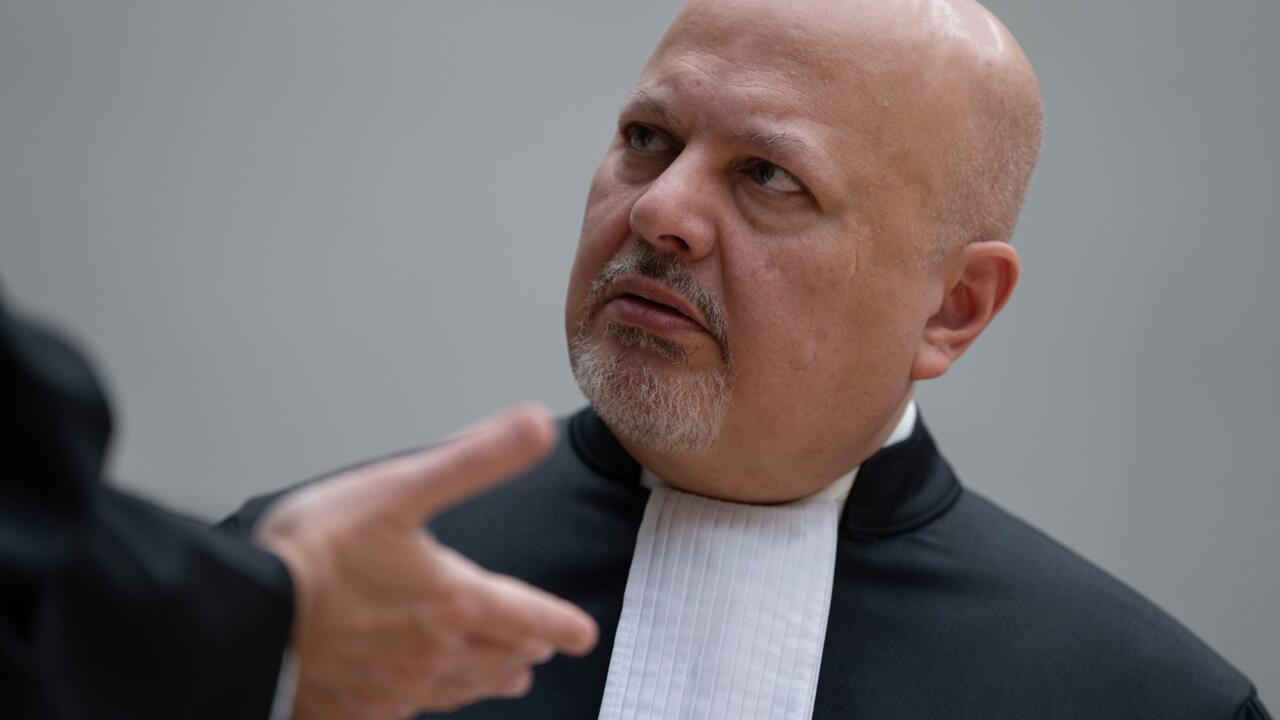
Member state representatives of the International Criminal Court (ICC) voted to remove the global tribunal’s chief prosecutor on Friday, nearly two years after sexual misconduct allegations against him first emerged, diplomatic sources told Reuters and The Associated Press.
British barrister Karim Khan has been accused of sexual misconduct with a female aide, as outlined by the AP in a series of stories, allegations which he has steadfastly denied.
By a large majority, the ICC’s 125-member states ousted Khan from his position, the first time a chief prosecutor has ever been removed from office.
The 56-year-old Khan was temporarily removed from his duties at the ICC in June, pending Friday’s vote, after a report by the executive committee of the court’s oversight body found he had committed “serious misconduct”. According to documents seen by the AP, Khan engaged in a sexual relationship with the woman and tried to prevent her from pursuing her allegations. Khan disputes those findings.
Khan was not be present at the closed-door meeting on Friday, as he is barred from entering the US after being sanctioned by the Trump administration over the ICC’s investigation into Israeli officials for the military’s conduct in the conflict in Gaza.
In 2024, the ICC issued arrest for Israeli Prime Minister Benjamin Netanyahu and his former Defense Minister Yoav Gallant for crimes against humanity. The decision sparked a backlash by Israel and the US.
Secret ballot
Early in the session, a motion brought by Sierre Leone that would have made it harder to oust Khan failed and diplomats quickly moved forward to vote on removal, several hours ahead of schedule, according to three diplomatic sources who were familiar with the proceedings.
Countries voted by secret ballot. The court’s host state of the Netherlands said it voted for his removal, as did France and Norway, which made their decisions public ahead of the meeting.
“We believe it has been proven beyond reasonable doubt that his conduct constituted sexual harassment and abuse of power,” Norway’s deputy foreign minister, Andreas Motzfeldt Kravik, said in a statement to the AP.
In a letter to Parliament last week, Dutch Foreign Minister Tom Berendsen indicated that there was sufficient support to remove Khan. “Although the balance of power within the ASP is still evolving, the position of most contracting parties also appears to be in line with the recommendation of the ASP Office,” he said.
Päivi Kaukoranta, president of the Assembly of State Parties, said at the public opening of the meeting that the vote would be in private to “address a complex and sensitive disciplinary matter as part of this governance and oversight role of the International Criminal Court.”
The lengthy and complicated process has pitted human rights advocates, staff and member states against one another at a time when the court is already facing daunting challenges, including a campaign by the US to “ dismantle” the ICC, which was established to prosecute people responsible for humanity’s worst crimes.
(FRANCE 24 with AP and Reuters)

Europa Monitor is a seasoned News Editor with over a decade of experience in journalism. Known for his editorial expertise and commitment to accuracy, Europa Monitor leads teams to deliver high-quality news content.