First, a confession of my intellectual position. I am not in that camp of historians/analysts who think the United States is a fading power. It may seem “overstretched” but that is because it has been distracted with extraneous and non-strategic issues (eg, George W. Bush’s 8-year-long war on terror, Obama’s bombing of Syria (it began in 2014 and lasted until January 2017, resulting in 7000 + strikes)) and Libya, now the US-Israel and Iran War, etc., and has not been concentrating on how its adversaries are getting stronger and how hundreds of billions of dollars worth of wealth was being annually transferred from the US to China, Vietnam, Cambodia, and some other countries.
I envisage the United States remaining militarily the most powerful country in the world for the foreseeable future. I also expect the US economy to remain the largest economy for quite some time, provided the Federal Government (a) reins in its spending (I hope without hurting its poor who build wealth), and (b) begins to pay its debt. The annual interest bill on US Treasury borrowings is now around one trillion dollars. It is the second-biggest expenditure budget item after social security, and surpasses defence or Medicare allocations.
Irrespective of whether the US repairs its balance sheet, I do see the US continuing to lose legitimacy as a global superpower, a phenomenon that in modern times earnestly began with the Clinton Presidency and has accelerated under every subsequent President without exception.
In this article, I explore the reasons why the trust in American leadership and judgment continues to dwindle. Why do people and nations increasingly view its actions and policy pronouncements with suspicion?
POST-WORLD WAR II GLOBAL ORDER
After the end of World War II, the US found itself an undisputed leader of what we call today the West. It took two initiatives simultaneously: (a) through the European Recovery Program (popularly known as the Marshall Plan), it provided massive economic and technical assistance for the rebuilding of Western Europe (this also boosted the size of the US economy and exports, and established its technological superiority); and (b) it laid the foundation for a new global order based on principles that would prevent future global wars and stem the tide of communism.
These principles were: all states are equal and have the same rights (Sovereign Equality), Democratic Governance (i.e., change of government through free and fair elections), citizens of every country had a right to choose their own government (National Self-Determination), and every individual is entitled to certain fundamental freedoms (as per the 1948 UN Universal Declaration of Human Rights).
In comparison to the USSR, the US also encouraged free-market capitalism and solving of global economic and political issues/conflicts/crises through international/multilateral institutions (eg, UN, WTO, IMF, World Bank, NATO, Rio Treaty, etc.). The US either dominated these institutions in its own right or with the help of its Western allies.
How did the reputation of the US, a country that everybody in the world wanted to emigrate to, dreamed of studying in its universities, and aspired to be its citizen, reach its nadir?
It is fashionable to blame the Trump Presidency I and II for this low point. Trump’s actions certainly have played a cyclopean role, but in reality, this reputational damage is the accumulated impact of many events/trends spread over several presidential administrations. It is difficult to categorise these events as many of them straddle several categories. But they are all self-inflicted wounds.
As these events have piled up, they have made it increasingly difficult for the US to persuade other countries to follow its lead/suggestions. Consequently, the US has been forced to use coercive methods to achieve its aims.
PRESIDENTIAL WARS
Wars launched or supported by different Presidents have been one of the main causes of this reputational damage. The rules-based system says if country A has not been attacked by country B, country A cannot attack country B unless it has the permission of the UN Security Council. In the case of the US, the President also needs the permission of the US Congress (The War Powers Resolution).
President Clinton did not receive formal authorization from either the UN Security Council or the United States Congress before the US and NATO launched their 79-day bombing campaign against Yugoslavia in 1999. About NATO it must also be noted that Yugoslavia was not threatening or intending to attack any NATO member. While most international law experts consider the campaign a violation of the UN Charter, supporters of action argue it was a legally justified “humanitarian necessity” to stop the ethnic cleansing of Kosovo Albanians.
His successor, George W. Bush, who launched the Iraq War Mark II, received the authorisation from the US Congress but never from the UN before he invaded Iraq in 2003. The UK, Australia, Poland and other European countries were part of Bush’s “coalition of the willing.” The US invaded Iraq to remove and destroy Weapons of Mass Destruction (WMD).
It is well documented that no WMDs were ever found in Iraq. In my article on security options available to the Gulf Monarchies as a result of the recent Israel-US and Iran War, I also pointed out that Bush invaded Iraq against the advice of numerous Middle East analysts and a plethora of US intelligence agencies and his invasion of Iraq eliminated a regional actor that was containing Iran.
In an interview with Vanity Fair (May 9, 2003), the then-Deputy Secretary of Defence Paul Wolfowitz said, “For bureaucratic reasons, we settled on one issue, weapons of mass destruction, because it was the one reason everyone could agree on.”
The rationale for the Iraq War Mark — II lay in the George W. Bush Doctrine of preemption which asserted that the US had the right to strike a country preemptively, if the US was of the view that the country in question might pose a threat to its security in future (i.e., before that threat has materialized).
In practice, the US was telling the world that (a) it will not hesitate to act alone if it meant ignoring international law and such organisations as the UN Security Council; and (b) it will not allow anybody to challenge its military dominance.
The preemption doctrine was dressed as getting rid of dictators and autocrats and helping the countries under their rule to build effective democracies. Nobody was deceived by this façade.
They knew it was a declaration by the neoconservatives, who believed that seeking a UN mandate amounted to surrendering US sovereignty, that the US was above the law.
Instead of building a democratic Iraq, the US left a destabilised Iraq (in December 2011) in the grip of sectarian civil war and a sanctuary to several Islamist groups. It remains destabilised.
Later, the administrations of George W. Bush, Obama, Trump-I and Biden will get exhausted fighting the Taliban militia and leave a destabilised Afghanistan in December 2021 in circumstances that amounted to abject surrender. Those with long memories knew this is how the US had behaved under Nixon when it withdrew from South Vietnam. The US not only left billions of dollars worth of defence equipment but also left most of the Afghan nationals (and their families) who had helped the US and NATO forces for the past 20 years at the mercy of the Taliban.
President Obama bombed two countries in the Middle East, Syria and Libya, in the name of protecting human rights. Both remain destabilised to this day.
Obama received approval from the UN, but he did not seek or receive permission from the U.S. Congress before initiating the bombing campaign in Libya in March 2011.
The 1973 War Powers Resolution demands that the US President must get congressional approval if U.S. forces are deployed into “hostilities” for more than 60 to 90 days. The Obama administration overruled its own top Pentagon and State Department lawyers. It argued that U.S. forces were not engaged in “hostilities” because no ground troops were employed and they were merely helping other fellow combatant allies in a supporting capacity, eg, refuelling, intelligence, and drone strikes. He was rebuked by a bipartisan vote of 295-123 by the House for his legal shenanigans,
NATO countries also took part in bombing Libya. As in Yugoslavia, NATO did not have the UN authorisation to bomb Libya.
It is worth recalling here that the NATO criticises Russia’s invasion of Ukraine as being against the rules-based order. But it had acted illegally too both in Yugoslavia and Libya.
When President Obama bombed Syria in September 2014, he relied on unilateral executive actions. In other words, he was following George W. Bush doctrine of preemption. He neither sought the UN or US Congress’ permission. It was a typical example the US behaving like a Global Emperor or warlord whom everyone must follow, pay tribute to and must remember the Emperor’s laws applied only to his underlings and not to the Emperor.
Just like other US interventions, Obama’s intervention in Libya was an exercise in failure. Both Libya and Syria remains engulfed in civil war even after 12 years.
The maximum damage to the US reputation has been done during the Trump-I-Biden-Trump-II years. Before I discuss these two presidencies, I want to highlight a few additional ways the US has damaged its reputation.
WITHDRAWING FROM INTERNATIONAL RESPONSIBILITIES
The single most important factor that helped the US to build its soft power and then regularly cash in the political capital it thus accumulated was the constructive role the US played in building and strengthening various international organisations that helped global governance (i.e., tried to solve issue that crossed national boundaries) and assisted poorer countries in many different ways, eg, preventive healthcare, population control, expanding educational opportunities, improving food-security, making it possible for these countries to procure cheap loans towards construction of infrastructure, etc.
To gut these programmes or withdraw from such programmes or penalise or starve such organisations of funds has been an identifying feature of the Republican Presidents Reagan, George W Bush and Trump Mark I and II. On the other hand, President George H W Bush was an exception (he was in the mould of Eisenhower).
UNITED NATIONS: President George W Bush was in the Reagan mould. Neoconservatives dominated his cabinet. Presidents Reagan and George W Bush exhibited hostility towards international organisations, but in different ways. Reagan was a Cold War warrior. He believed that the Soviet bloc dominated the UN and its different branches. Instead of seeing them as neutral, Reagan saw the bloc of 77 non-aligned developing nations as covert allies of the USSR. He withdrew from UNESCO in 1984 because the US could not control its activities. In the words of Reagan’s ambassador to the UN, Jeane Kirkpatrick, “The countries which have the votes don’t pay the bill, and those who pay the bill don’t have the votes.”
Reagan refused to sign the UN Convention on the Law of the Sea (UNCLOS) in 1982, despite taking part for years in multilateral negotiations. Similarly, when the International Court of Justice ruled against the U.S. in 1984 for secretly mining Nicaraguan harbours, Reagan refused to accept the verdict.
Following the US lead, China would do the same in rejecting the Permanent Court of Arbitration (PCA)’s ruling about a group of islands in the South China Sea. Their ownership by China was contested by the Philippines. China continues to reject the verdict as “illegal, null, and void”.
In 1985, Reagan signed a bill (the Kassebaum-Solomon Amendment) that reduced U.S. funding to the UN from 25% down to 20%. This and delayed annual payment, etc. created a major UN cash-flow crisis.
President Clinton promised to support the UN. However, in his first two years in office (1993-94), US arrears to the UN rose to just over half of all UN regular budget debts. He did not change the Reagan budget cycle. Further, the Clinton Administration burdened the UN with peacekeeping tasks in Somalia, Rwanda and Bosnia.
George W Bush, on the other hand, was a unilateralist. Dismissing the UN as an inconsequential “debating society”, he launched his war against Iraq (Iraq War Mark II) without seeking UN authorisation. He also withdrew the U.S. signature from the Rome Statute, which created the International Criminal Court (ICC). To show utter contempt for the UN, he appointed John Bolton as the US Ambassador to the UN. Bolton was and is a well-known ferocious critic of the UN.
President Trump is different from both Reagan and Bush. His abhorrence of the UN, its subsidiary bodies and international organisations that the US is part of is rooted in his populist “America First” and isolationist policies that he developed to create his MAGA (Make America Great Again) base. Like George W Bush, he is also a unilateralist. Laws do not bother him. In an interview on January 8, 2026 with New York Times reporters he said,“I don’t need international law.” He went on to say, “Yeah, there is one thing. My own morality. My own mind. It’s the only thing that can stop me.”
The approach of Trump Mark — II to the UN and other international institutions can be described in five words: wholesale institutional abandonment and de-funding.
Trump signed a presidential memorandum ordering the U.S. to withdraw from 66 international bodies. This included 31 United Nations subagencies, eg, UNESCO, WHO, UN Human Rights Council, etc. He thought these organisations were promoting “globalist agendas” over American interests.
CLIMATE CHANGE : Soon after George W Bush came to power, he pulled the US out of the Kyoto Protocol climate change treaty which, Al Gore signed on behalf of the Clinton Administration in 1998. Bush argued it would hurt the US economy (read the fossil industry’s interests).
On numerous occasions, Donald Trump has called climate change and related environmental policies a “hoax,” a “scam,” and a “con job.” Soon after being sworn in, Trump — I pulled out of the Paris Climate Agreement, the UN Human Rights Council, UNESCO, the Trans-Pacific Partnership, and the INF Treaty. In July 2020, due to his administration’s policies towards the COVID-19 pandemic, Trump-I gave one year’s advance notice to withdraw from the World Health Organisation (WHO).
In May 218, Trump also tore away the JCPOA, a multi-nation nuclear agreement signed with Iran to contain its nuclear ambitions. Trump’s pulling out of this agreement has resulted in the present US-Israel and Iran War and consequential damage to the world economy.
In 2017, Trump also threatened to cut aid to countries that voted in support of a draft UN resolution condemning the US decision to recognise Jerusalem as the capital of Israel.
Besides pulling out of the Paris Climate Agreement, during his second term, Trump also pulled out of the US Senate-ratified UN Framework Convention on Climate Change (UNFCCC) treaty.
USAID: The United States Agency for International Development (USAID), a programme annually costing less than 1% of Federal budget allocations (between US$40 billion and US$45 billion), was, without doubt, the most powerful tool in the US soft power armoury. Across about 130 countries, it funded projects relating to food security, disaster relief, global health, education, economic growth, and democracy-promotion initiatives. The dismantling of this one programme has not only irreparably hurt the US’s ability to persuade scores of countries to support its international initiatives/positions but has opened an opportunity for China and Russia to increase their influence internationally.
I mention below two examples to show readers how this programme has punched above its weight and generated immense goodwill for the US:
(a) A study published in The Lancet (one of the most respected medical journals) concluded that withdrawal of funding for development programmes by the USAID could lead to over 9.4 to 14 million additional global deaths by 2030, with children accounting for roughly one-third of the casualties.
(b) A paper by CSIS (a Washington-based think tank) has determined that cancellation of health programmes relating to global vaccination has already caused widespread shortages in critical therapeutics, triggering spikes in HIV-AIDS, malaria, and regional polio outbreaks.
The appointment of Robert Kennedy, Jr. as health secretary and his anti-science and anti-vaccination policies have further damaged the reputation of the US.
Despite historically supporting the USAID programme as a senator, Marco Rubio, as Trump’s foreign secretary, has echoed Trump and Elon Musk’s views and criticised USAID programmes as encouraging dependency.
ABU GHRAIB, GUANTANAMO BAY AND GINA HASPEL
The images of abuse and torture of Iraqi detainees at Abu Ghraib prison by U.S. military personnel especialley shocked the world when they were telecast on April 28, 2004. Until these photos came into light, the US had portrayed itself as a champion of international human rights that believed both in the letter and spirit of the UN Convention Against Torture and the Geneva Conventions.
The spin doctors at the White House and the Pentagon went into overdrive to paint this episode as deeds of a few rogue military personnel. The then US-President Bush stated, “Under the dictator [Saddam Hussein], prisons like Abu Ghraib were symbols of death and torture. The same prison became a symbol of disgraceful conduct by a few American troops who dishonoured our country and disregarded our values.”
Dawn L. Rothe, a prominent criminologist and professor at Florida Atlantic University, widely recognised for her work on state crime, crimes of powerful individuals and corporations, wrote her Ph.D. dissertation (at Western Michigan University) on prisoners’ abuse at Abu Ghraib. Her thesis is entitled, “The Masquerade of Abu Ghraib: State Crime, Torture, and International Law.”
Professor Rothe concluded, “The findings suggest that despite unequivocal individual responsibility, this was not simply a case of a few individual acts committed by rogue soldiers. Rather, a thorough investigation and criminological analysis of the reasons and forces behind the torture at Abu Ghraib suggest that the Executive Branch, the Pentagon, CIA, and Military Commanders bear culpability for the way in which their policies and demands for intelligence altered the traditional handling of prisoners.”
To appreciate the arrant hypocrisy of the US, I very briefly point out to the reader following three things:
First, while the US actively pursued or encouraged/connived in the policy of torturing political prisoners/terrorists in Iraq, Afghanistan, and Syria, it has been castigating other nations for such acts through official diplomatic statements, presidential declarations, and the State Department’s annual Country Reports on Human Rights Practices for decades.
Second, during the same period when the CIA was flying terror suspects to countries like Egypt and Syria for interrogation under torture, the U.S. State Department was publicly excoriating the same two countries for using torture to obtain confessions.
This is what the U.S. Department of State, Country Reports on Human Rights Practices for 2003 (Released February 2004) says about Egypt:
“There were numerous, credible reports that security forces tortured and mistreated detainees… Principal methods of torture reportedly employed… included victims being: stripped and blindfolded; suspended from a ceiling or door frame… and subjected to electric shocks… Torture was used to extract information or coerce confessions.”
And the Country Reports on Human Rights Practices for 2002 (Released March 2003) on Syria:
“The Government continued to use torture… Former detainees and human rights organizations reported that torture methods included electrical shocks; pulling out fingernails; forcing objects into the rectum… and forcing detainees to listen to the screams of other prisoners… The courts routinely accepted confessions obtained under torture as evidence.”
Even after spending 15 years as an academic at Stanford University, Condoleezza Rice (ex-National Security Advisor and Secretary of State to President G W Bush) did not have the honesty and courage to admit that the US was torturing its detainees and prisoners and that she was involved in the framing and execution of that policy. She was still calling the torture of detainees at Abu Ghraib, Afghanistan and Guantanamo Bay “enhanced interrogation techniques”.
She reproached her audience at DePauw University to be careful in the use of such words as torture. I wonder how the late Senator John McCain, who was tortured in Vietnam, would have responded: He tried to contain the Bush-Cheney-Rice stain on US History.
Those of us who know the very basics of the US’s policy towards Latin America during the Cold War would know that under its National Security Doctrine, the US treated all the Central and Latin American and Caribbean island countries as one battleground to fight communism. Consequently, it trained nearly sixty thousand security forces belonging to 23 countries in the Western Hemisphere in counterinsurgency, coercive interrogation, physical abuse and psychological warfare techniques.
In the four decades since 1954, over 200,000 Guatemalans perished in political violence. The 1980s saw 500,000 disappear/killed in El Salvador. During the same period, Nicaragua saw nearly 40,000 killed, 80% of them were Mayan people. The late 1970s witnessed the Argentine military and associated death squads massacre 30,000 of their fellow Argentinians.
While some Latin American countries established “truth commissions” to come to terms with this dark chapter in the history of their respective countries, US officials and politicians who developed, financed and implemented these policies have chosen to remain silent in spite of overwhelming evidence recently dug up by US academics.
I have mentioned the above role of the US in Latin America solely to show the hypocrisy of the US foreign policy messaging on this issue against its own well-documented deeds since early 1950s. It would be a mistake to interpret the above section as my description of virtues/shortcomings of communism or capitalism.
Further, to slap the world across its face, and to tell them it did not give a damn about international law and considered itself above the law, in an act of brazen arrogance in 2018, the Trump Administration appointed Gina Haspel as the Director of CIA knowing fully well that she had supervised the torture of the Guantanamo Bay detainees, and knew about rendering of prisoners and terrorists to Egypt and Syria for interrogation.
TRUMP — II AND VENEZUELA, CUBA AND IRAN WAR
The US has described the forcible abduction of Venezuelan President Maduro by US special forces as a judicial ‘extraction mission’ undertaken by law enforcement operatives supported by the military. But this operation involved strikes on military targets in and around the Venezuelan capital, Caracas and was preceded by the full naval blockade of Venezuela.
The U.S. described its massive Caribbean naval deployment, blockade of Venezuela, and maritime interdictions of boats/ships leaving/coming to Venezuela as self-defence against drug trafficking. However, allegations of narcotics smuggling or cartel activity cannot justify blockading a sovereign nation. Article 51 of the UN Charter specifically states that any military action against a sovereign nation can only be termed as self-defence if an imminent attack is expected by the foreign state.
Both the naval blockade of Venezuela and abduction of President Maduro have been widely described as illegal by experts in international law.
Similarly, President Trump’s January 2026 Executive Order 14380 imposes secondary tariffs on any nation supplying oil to Cuba. It violates international law according to UN experts, international bodies, lawyers teaching and practising international law. It is also a textbook example of illegal economic coercion.
Both the EU and NATO have been vocal in criticising Russia for violating the rules-based order but have reacted very timidly to these illegal acts of waging wars by the US. President Zelenskyy, who rightly criticises Russia for violating Ukraine’s sovereignty, has not uttered a word against the US.
I have written extensively about the US-Israel War against Iran here. This war, initiated by President Trump, is also very widely considered illegal. It further damaged the reputation of the US because it showed that on both occasions (i.e., when it attacked Iran’s nuclear sites in June 2025 and now on February 28) the US was negotiating in bad faith with Iran.
ECONOMIC SANCTIONS AND DE-DOLLARISATION
Since the Bronze Age, countries have used economic sanctions to coerce other states, stifle their economic development or bend them to their wishes. We come across the first documented evidence of the use of a politically motivated economic embargo (the kind the US and the EU have tried to put on Russia, Iran, and North Korea) in a treaty signed by the Hittite King Tudhaliya IV with his vassal King Shaushgamuwa of Amurru (a Bronze Age kingdom spanning modern-day western Syria and northern Lebanon) in 1235 BCE. The treaty is aimed at stifling trade and economic opportunities of the Neo-Assyrian Empire, Tudhaliya IV’s geopolitical competitor and enemy. The treaty directs the King of Amurru not to allow Amurru merchants to trade with Assyria and not to let any ship of Ahhiyawa (Late Bronze Age kingdom located west of the Hittite Empire, most commonly identified by modern scholars as Mycenaean Greece) go to Assyria using Amurru’s coastal waters.
Gary Clyde Hufbauer, et.al. published a landmark study which evaluated the historical economic sanctions from World War I up to the post-Cold War (1990). They found that the unilateral sanctions were particularly unsuccessful, achieving their goals in only 13% of the cases.
Pericles, “the first citizen of Athens” (also known for commissioning the Acropolis), also discovered their ineffectiveness when he imposed them against the Megarians (Megarian Decree of 432 BCE), who were under Sparta’s military protection.
Thomas Jefferson was the first US President to use economic sanctions. He sanctioned Britain by signing the Embargo Act of 1807 into law. His act hurt the US economy more than it hurt Britain.
In modern times, this practice genuinely started with the Clinton Presidency. Since then, all Presidents have used economic sanctions as their preferred option instead of resorting to diplomacy, in spite of their lack of success in delivering desired outcomes.
The US has economically sanctioned three times as many countries/individuals/ international organisations as other countries. Nearly a third of all countries suffer from some form of US economic sanctions.
In more recent times, the US and its allies have imposed the most severe economic sanctions against Russia, Iran, North Korea and Belarus yet they have failed to deliver desired results in all four instances.
In spite of their ineffectiveness, US Presidents have opted for them because it does not cost the US anything to impose them.
President Obama, the most unworthy recipient of the Nobel Peace Prize, was the first to abuse economic sanctions. To gain a short-term advantage over Iran, he permanently weakened the global financial system, brought about its fragmentation, and bears the primary responsibility for the process of de-dollarisation in international trade.
SWIFT (Society for Worldwide Interbank Financial Telecommunication), is a Belgium-based messaging cooperative of banks and financial institutions, large corporations, fintechs & payment service providers, and other corporations that deal with equities and bonds (eg, stock exchanges, brokers, wholesale bond dealers, etc.). It is not a bank. It is a secure messaging service. It is essential for cross-border payments. By 2022, it connected over 11,500 institutions in more than 200 countries and handled around 44 million messages per day.
SWIFT’s operations are overseen by a group of 10 central (=Reserve) banks. These include the Federal Reserve (Reserve Banks of the US), the UK, France, Germany, Japan, the Netherlands, Sweden, Switzerland and the European Central Bank and the National Bank of Belgium (the last two act as the lead overseers).
Until 2012, SWIFT operated under a strict rule of political neutrality.
In order to pressure Iran to restrict its uranium enrichment activities, Obama put intense pressure on central banks overseeing SWIFT and host countries. Thus, SWIFT was weaponised and forced to expel Iranian banks from its cooperative. This action crippled Iran’s oil export revenues and cut its foreign trade by roughly 30% because non-Iranian banking entities could not send or receive money from Iranian banks.
Since then, SWIFT has been used a foreign policy tool both by the US and Western European Countries to punish North Korea, Russia, and Belarus.
The weaponisation of SWIFT gave a very powerful tool to countries like the US. It allows them to cripple a country economically without firing a shot, but it has weakened the global finance system by causing its fragmentation.
The sanctioned countries have developed trade ties with other countries. Criminal gangs have sprouted to help these countries to avoid sanctions. But the biggest adverse development has been the development of alternate messaging and settlement networks as many countries now genuinely fear that their assets in the West could be frozen if their banks were expelled from SWIFT.
Fearing such a scenario, in 2015, China launched its own messaging and settlement system called CIPS (Cross-Border Interbank Payment System). It is growing fast. It now covers more than 5,000 banking institutions spanning 190 countries and regions. In 2025, it processed approximately 700,000 to 900,000 transactions per month and cleared an annual total of 8.44 million transactions amounting to ¥180 trillion or US$25.53 trillion. It processes and settles transactions directly in Chinese Yuan (Renminbi) thus, facilitating de-dollarisation of international trade.
The EU is also developing its own version of SWIFT so that it would not be using an inter-bank messaging system dominated by the US. The EU, not the US, has been the biggest loser of fragmentation of global financial system.
Russia has also developed its own messaging system: it mostly works between 400 domestic banks and some sanctioned countries. Russia’s messaging system is called SPFS (System for Transfer of Financial Messages). It is like an extremely scaled-down version of SWIFT.
The weaponisation of SWIFT, along with the freezing of $300 billion in Russian central bank assets in 2022, has also hastened the process of de-dollarisation. This has also caused many central banks to offload or lighten their US dollar holdings and replace them with gold and other assets.
Some countries (including Germany, France, the Netherlands, Poland, Austria, Turkey, etc.) have repatriated their gold holdings from the US to home vaults. India has done the same with a large percentage of its bullion holdings in the UK. Some of the geopolitical reasons behind these moves are: fear of sanctions, asset freeze, trend towards de-dollarisation, and consequent trend towards strengthening domestic financial sovereignty, etc.
Biden’s attempt to use Russia’s frozen assets and interest earned on them to finance Ukraine’s war with Russia only intensified fears that Western financial networks cannot be trusted.
Thus, both Obama and Biden have done incalculable damage to the global financial system for short term political gains.
As a result, the US$’s share of global foreign exchange reserves has fallen to around 52% from over 70% twenty years ago,
While Presidents Obama and Biden violated the integrity of the entire global financial system forever, Trump damaged “economic sanctions” as a foreign policy tool in another way. He has a propensity to use them as a retributory tool to get even with his perceived enemies. Trump turned it from being a weapon of the State to a personalised weapon.
Trump increased tariffs on Brazilian imports from 10% to 50%. This is how BBC explained, “This new tariff rate isn’t about levelling a trade playing field. It’s political, and part of a growing feud between the US and Brazil.
“President Trump has framed these tariffs as retaliation over the prosecution of his ally, right-wing former Brazilian President Jair Bolsonaro.”
In August 2018, Trump doubled tariffs on Turkish aluminium and steel because Turkey had detained an American evangelical Christian pastor, Andrew Brunson. This move caused a sharp devaluation of the Turkish lira. Similarly, when Turkey invaded Syria against Trump’s wishes, he imposed tariffs as “payback”, tweeting that he would “totally destroy and obliterate the Economy of Turkey.”
INTERNATIONAL CRIMINAL COURT
The case of the ICC (the International Criminal Court) is worth examining not only as an instance of using sanctions as a retributive tool, but it also demonstrates the utter contempt for law, i.e., the so-called rules-based order, that the US and its European allies have when an ICC judgement is not to their liking.
The ICC judges, after examining the defence and prosecution’s evidence presented to them in the Pre-Trial Chamber, issued arrest warrants against Israel’s Prime Minister Netanyahu, his defence minister and a Hamas terrorist (reportedly already target-killed by the Israeli Defence Forces) on November 21, 2024. The ICC was responding to a formal application by its Chief Prosecutor, Karim Khan, in May 2024.
President Biden aggressively rejected the warrants, calling the ICC’s actions “outrageous”. He also excoriated any implied moral equivalence between the “democratic state” of Israel and the terrorist group Hamas, totally ignoring the actions of the IDF that genocide and Holocaust scholar Raz Segal and many others called “a textbook case of genocide.
After being re-sworn in, President Trump went even further. He called ICC’s actions “illegitimate and baseless actions”, described the ICC as a “national security threat”, and issued Executive Order 14203 to freeze assets and revoke visas for International Criminal Court (ICC) personnel.
It is worth recalling that President Biden had welcomed the ICC’s arrest warrant for Russian President Vladimir Putin, calling it “justified” because Putin had “clearly committed war crimes”.
This difference in approach rightly drew widespread accusations of a geopolitical double standards. It was not just the US response. Germany, the UK, France, Hungary, Italy, Romania, Poland, etc, similarly criticised the ICC for issuing arrest warrants, and said that they would not act on the ICC’s them. In other words, they would ignore their treaty obligations.
The ICC was established by a 2002 treaty to investigate and prosecute war crimes, genocide, and crimes against humanity. Now the Trump administration has launched a campaign to dismantle it because the US considers it a threat to American sovereignty.
LITANY OF DOUBLE STANDARDS
Their responses to the ICC’s warrants is not the only example of double standards. The behaviour of the US and its allies is replete with such instances of pompous sanctimony. I merely give below three examples from the very recent past to show this affected piety.
Infrastructure Strikes: The US and its NATO allies very promptly categorised Russian strikes on Ukraine’s power and water infrastructure as war crimes, yet largely defended or tolerated when Israel was doing the same on a gigantic scale in the Gaza Strip, and it continues to do so.
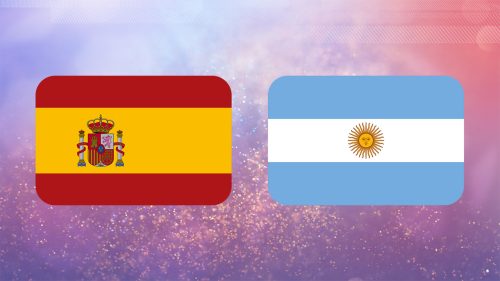
Venezuela, Cuba and Iran: The US and its NATO allies vociferously castigate Russia every day for its illegal invasion of Ukraine. Except for France and Denmark, the US allies have been silent on the illegal blockade of Venezuela and the kidnapping of its President Maduro by the US. They have also not uttered a word about the illegal US blockade of Cuba. Numerous scholars have called the US’s attack on Iran illegal, but none of the NATO member countries, except Spain, has called out the US on it. Even those European countries who meekly criticised the US’s action as illegal have since been cooperating with the US in its war against Iran. And there was not even a faint whisper of criticism from the West’s poster boy and the loudest champion of sovereignty, Ukrainian President Zelenskyy.
Kosovo and Palestine: Because they saw that it would weaken Russia’s hold on Eastern Europe, Western countries promptly supported Kosovo’s claim for statehood and self-determination. Ditto for Ukraine. While they have been consistently blocking or delaying the recognition of Palestinian statehood at the United Nations for the last six decades. A fracture in Western position has occurred very recently when Spain, Iceland and Ireland recognised Palestine in response to the behaviour of the Israel’s Defence Forces in the Gaza Strip that many Jewish scholars of the Holocaust have labelled as committing genocide.
Extra-Judicial And Targetted Killings: This is another area where double standards of the West are so blatantly on display. Israel has been carrying out targetted and extrajudicial killings in occupied territories of Palestine for more than half a century. It carried them out on an industrial scale on the first day of the recent Israel-US and Iran War. The West has either kept mum about these incidents or defended them by stating that Israel has a right to defend itself. But has severely criticised Palestinians if any Israeli soldiers or settlers have been killed/wounded in skirmishes. Ditto the elimination of dissidents in Russia or civilian casualties in Ukraine.
PRESIDENTIAL CORRUPTION
Here again, the biggest culprits responsible for damaging the reputation of the US have been Presidents Biden and Trump. However, if we were to measure presidential corruption in terms of financial gains, the money made by the Biden family is chicken feed in comparison to the money being raked in by President Trump and his family members.
During the first 18 months of Trump — II presidency, Donald Trump, and his two adult sons (Donald Jr. and Eric) have used his presidency to realise global real estate deals (luxury property developments in Serbia, Romania, and Albania, Golf resort in Vietnam, etc.) corporate licensing, cryptocurrency ventures (the UAE invested $500 million in the Trump backed cryptocurrency platform, World Liberty Financial, The $TRUMP Token, Digital Collectibles, etc.), selling branded merchandise. Even the companies created to collect political donations by Trump invest money in his private businesses.
Donald Trump and his family have added an estimated $4 billion to their collective net worth in the last 18 months.
Hunter Biden monetised his father’s political position by selling access to the “Biden brand,” and earned (based on available evidence) an estimated $11 million between 2013 and 2018 through foreign consulting contracts, board seats in companies that worked in industries where he did not have any expertise in.
To ensure Hunter Biden will not face any criminal proceedings for his corrupt behaviour, President Biden, a few days before leaving office, pardoned Hunter Biden. Trump, after his re-election, used the same justification (as used by Biden) to pardon his supporters involved in January 6, 2021, those already convicted or had a criminal case pending against them.
It is not merely the corruption of Biden and Trump, but what is more disturbing is the open connivance of both parties to such acts. The US broadcast to the world that it was as corrupt as any authoritarian regime in Asia, Africa and Latin America.
JANUARY 6, 2021 RIOTS
The Capitol Hill, where Vice President Pence was officiating the counting of the Electoral College votes on January 6, 2021, came under attack by Trump’s supporters (many of them were armed).
These riots were incited by Trump and numerous GOP lawmakers. They all sought to overturn the 2020 election results.
These riots resulted in injuries to 174 policemen, and the death of 5 of them can be directly or indirectly attributed to these riots.
This event, so fresh in the memory of people who may be only marginally interested in politics, has been well documented by newspapers, academics and think tank analysts. I do not wish to spend much time on it.
I would confine myself to merely point out that Trump and his supporters’ claims were so wild and baseless that they were rejected by every court of law and even by judges whom Trump had appointed.
Only last Friday, i.e., July 10, 2026, a Trump appointee federal judge, at the request of the Justice Department, dismissed the seditious-conspiracy case against four top members of the Proud Boys under protest because legal precedents left him no choice.
In his ruling, U.S. District Judge Timothy J. Kelly reprimanded Trump for his attempt to lift penalties against those who instigated and were involved in the January 6, 2021 riots, and sought to overturn Trump’s loss to Joe Biden.
This is how The Washington Post reported:
“The judge indicated he was wiping out the Proud Boys’ charges — against Ethan Nordean, Joseph Biggs, Zachary Rehl and Dominic Pezzola — under protest, saying legal precedents left him no choice but to accede to the request by the Trump administration’s prosecutors.
“As the Court has said many times, the attack on the Capitol on January 6, 2021 was a perilous event…
“It was an attack on people, including police officers, many of whom were injured. It was an attack on a coordinate branch of government — Congress — that the Founders saw fit to give a place of primacy in Article I of the Constitution. And it was an attack on the Constitution’s mechanism to facilitate the peaceful transfer of power from one president to the next.”
Yet President Trump, if his address to the Nation on July 16, 2026 is any guide, still seems unwilling to accept his loss to Biden.
The electoral college votes were correctly counted, though belatedly, and Biden was declared the winner, yet the people outside the US will remember the day as an unsuccessful attempt to stage a coup. In that sense, this event is the biggest self-inflicted (still bleeding) wound not only on the body of the US as a nation but also on its reputation.
COMPLICIT IN GENOCIDE
Hamas militants’ attack on the Supernova music festival on October 7, 2023, resulted in 1,195 individuals being gunned down and 251 were taken hostage. It attracted swift and the strongest condemnation from many political leaders (not just Western leaders), international human rights organisations, countless public intellectuals and opinion makers. It was a barbaric act of unmatched cruelty and hatred (as well as stupidity) towards fellow human beings simply because they were Jews.
But it is worth remembering that Hamas is the creation of Prime Minister Benjamin Netanyahu. He encouraged its formation and funded it so that he could say that Yasser Arafat’s Fatah Party or the Palestinian Authority did not represent all Palestinians. Therefore, he did know whom to talk to. Just like his mentor, Menachem Begin and other Likud leaders, Netanyahu has never believed in a 2-state solution but is shrewd enough, until now, never to say so publicly.
He has always believed in Greater Israel. He considers both the Gaza Strip and the West Bank as provinces of Greater Israel.
This is why Netanyahu’s response to Hamas’s killing and abduction of innocent people (mostly Israeli citizens) has been so gargantuanly disproportionate and brutal: He saw Hamas’s October 7 attack as a god-given opportunity to engage into a thorough ethnic cleansing and absorb a Palestinian-free Gaza Strip and the West Bank into Israel. When Netanyahu was interviewed by Sharon Gal on i24 TV news, he confessed that he felt he was on a “historic and spiritual mission,” and that he was “very” attached to the vision of the Promised Land and Greater Israel.
As early as October 2023, Raz Segal, an Israeli historian and associate professor of Holocaust and Genocide Studies at Stockton University (Sweden), described the assault on the Gaza Strip as “a textbook case of genocide,” and argued that the combination of military force and explicitly dehumanising rhetoric from Israeli officials fulfilled the criteria for the crime.
Omer Bartov, an Israeli-born professor of Holocaust and Genocide Studies at Brown University and a former IDF soldier, writing for The New York Times on July 15, 2025 titled his article, “I’m a Genocide Scholar. I Know It When I See It.” Professor Bartov quoted other genocide scholars, eg, Shmuel Lederman, William Schabas, Melanie O’Brien, the present president of the International Association of Genocide Scholars, Martin Shaw, etc., who had also reached the same painful conclusion.
Nearly every hospital, school, and mosque in the Gaza Strip has been destroyed. The United Nations Satellite Center concluded that the Israeli Defence Forces have demolished nearly 70% of all man-made structures in Gaza. The U.N. report also states that nine in 10 homes have been damaged or destroyed and thus rendered inhabitable. About 90% of the population has been displaced. Food and medicine have also been used as weapons.
In an Op-Ed entitled, “Enough Is Enough. Israel Is Committing War Crime” published in the Israeli newspaper Haaretz, the former Israeli Prime Minister Ehud Olmert wrote “What we are doing in Gaza now is a war of devastation: indiscriminate, limitless, cruel and criminal killing of civilians.” He went on to say, “It’s the result of government policy — knowingly, evilly, maliciously, irresponsibly dictated. Yes, Israel is committing war crimes.”
Award-winning Israeli novelist David Grossman also expressed in August 2025 that his country was committing genocide in Gaza.
However, there is still an invisibly small minority of conservative Jewish scholars, for instance, Norman J W Goda, Robert Satloff, who believe Israel never does anything wrong, have called their Jewish colleagues, such as Bartov, Lederman, Melaie O’Brien, etc. of being anti-Semitic.
In August 2025, the International Association of Genocide Scholars (it is the world’s leading association of genocide scholars) passed a resolution stating that Israel’s conduct meets the legal definition as laid out in the UN convention on genocide. has declared that Israel is committing genocide in Gaza. The IAGS has about 500 members. Out of these, 28% (140) took part in the vote and 86% of those (121) who voted supported the resolution. Following Netanyahu line, Robert Satloff dismissed them as discredited academics.
On 21 November 2024, the International Criminal Court (ICC) issued arrest warrants for Benjamin Netanyahu, former Defence Minister Yoav Gallant and Mohammed Deif of Hamas (according to Israel, killed in an air strike in Gaza in July) so that all three could be tried for war crimes. President Biden condemned the ICC’s decision as “outrageous”.
Trump went even further ordered the freezing of assets of the ICC personnel and barred them from entering the US.
Both Biden and Trump, without any hesitation, have continued to supply without hesitation all munitions and weapon systems Israel have been asking for to conduct its genocidal war in the Gaza Strip.
By teaming up with Israel, in its attack on Iran, Trump further sullied the reputation of the US among the comity of nations.
Trump teamed up with Isreal despite the fact that a report released by the UN in June 2026 concluded (after following a very rigorous methodology), that “Israel has targeted Palestinian children in Gaza in two distinct ways: directly by shooting at their vital organs using precision weapons such as quadcopters and snipers; and through use of high impact weapons causing widespread and systematic attacks on residential buildings, schools, and displacement camps crowded with children.”
Netanyahu dismissed the UN as Hamas sympathiser for producing this carefully researched report.
More than anything, the comments and actions of Biden and Trump show the utter hypocrisy and fake moralism of the US and in general, of the West: The Unites States’ concept of a “rules-based international system” only applies to its adversaries and not to itself or its allies. Something many countries have been complaining about for decades at least since the end of the Vietnam War.
CONCLUSION
I have confined myself above only to issues spreading over several administrations. There are many other issues that one could point out that have contributed to the US losing its legitimacy.
For instance, having revanchist intentions on Canada and Greenland, a re-elected Trump still not willing to accept the fact that he lost the 2020 election and consequently has been prepared to sully the reputation of the US as a democracy by questioning the integrity the whole electoral process, the gutting of Foreign Affairs Department, the Republican Party’s choice Mike Johnson as the Speaker of the United States House of Representatives though he repeatedly denied the validity of the 2020 Presidential election outcome, Trump backing the 2020 Presidential election result deniers for the House of Representatives and the Senate, Vice President Vance going to Hungary and giving a speech to back Orbán’s re-election bid, and while in Germany condemning political ostracization of the neo-Nazi Alternative for Germany (AfD) Party by mainstream parties. But I am hoping these issues are specific to the Trump era and will vanish when he leaves the White House.
I have also avoided discussing, for reasons of space, issues that have indirectly contributed to the weakening of the international standing of the US.
For example, President Clinton’s decision to support China’s membership to the WTO knowing fully well China was not a free market economy (it still not is) thus bringing about the hollowing of manufacturing sector in the US and in Europe or Clinton listening to Russia hawks (led by Madeleine Albright) not to the Pentagon and thus inviting ex-Warsaw Pact countries to join NATO, a decision that (after a gestation period needed for Russia to recover from the collapse of the USSR) has resulted in the Ukraine-Russia war. Or, more than US$8 trillion debt President George W Bush saddled the US balance sheet with as he fought his war on terror. This distraction and with Obama’s naivety offered China a god-given 16-years long opportunity to prosper at the expense of the US, both militarily and financially.
Unfortunately, for the last several decades, the US has suffered from shallow leadership, making poor strategic and financial decisions one after the other. Its balance sheet is under immense financial strain, and its manufacturing sector has been so hollowed out. It is finding the task of collective security a burden; therefore, it is unable to nurture alliances or encourage economic openness.
During the Cold War, both the Soviet Union and the US were militarily powerful. But the US had two more attributes that the USSR lacked: legitimacy and trust of the comity of nations. It earned trust and legitimacy by supporting programmes in poor countries that improved their food security and human capital. The US actively participated in global governance, tried to tackle issues that were transnational and made the world safer by successfully mediating or directly resolving several conflicts (eg, the Suez Canal and Cuban missile crises, the Camp David Accords, etc.).
After World War II, every war (including the Korean War) that every war the US has fought has been misconceived and a failure.
It has also suffered reputational damage by not acting when it should have. For example, a Rwandan Government initiated genocide of the Tutsi minority and moderate Hutus took place in 1994. It only lasted for about 3 months, but in that short period, between 500,000 and one million persons were brutally murdered by extremist Hutus. The Clinton Administration knew what was happening, but it took no action.
The Clinton Administration was widely and severely criticised. The Administration’s response to its criticism was that intervention in Rwanda did not align with the political or economic interests of the United States. The United States’ inaction in Rwanda was adversely compared with its prompt action in Bosnia and it was severely criticised for assigning less value to African lives than European ones.
Now we have three powerful countries: the US, China and Russia. But none enjoys the level of legitimacy or trust that the US enjoyed in the past. The US has not only lost its legitimacy and the trust of people all over the world, through its misadventures, it also becoming a dangerous nation.
In a family or community, a person earns respect by how he/she behaves, by his/her deeds. Soft power is a fancy name for moral authority. Nations earn soft power by their behaviour and deeds towards other countries. The US has been slowly losing soft power.
This is particularly so in a connected word where even the children in an Indian or African village have smart phones. You cannot lie to them. They know how to do a search on Google.
This is why an overwhelming majority of countries in Asia, Africa and Latin America did not buy Biden’s narrative that the Ukraine-Russia War was a fight between authoritarianism and democracy or that Israel’s actions in the Gaza Strip were legitimate actions in self-defence. Or that Trump is trying to make the Middle East safer by his war with Iran.
The Pew Research Center released its Spring 2026 Global Attitudes Survey last week. This year’s survey covered 42,151 people from 36 countries. The survey found that people in 27 of the 36 countries and territories surveyed have a higher opinion of China than the United States.
This one statistics alone tell you how low are now the stocks of the US, especially in countries where it needs higher standing, i.e., Asia, Africa and Latin America. It was only Europe the US scored higher than China. But China scored higher than the US in four NATO members: Greece, Hungary, Italy and Spain. Both in Canada and the UK China’s score was in mid-40.
Can the US earn legitimacy and the trust of the comity of nations again? Yes. But it will be a very slow process, and the US will need to put the foundation bricks one by one again. To begin with it will need better leaders. Above everything else, the US will need to learn to reflect on its actions and inculcate a sense of empathy. When its own security was under stress, it also resorted to the same kind of techniques for extracting information from detainees and terrorists as other insurgency-ridden countries have been using. So, it needs to moderate its holier-than-thou evangelical preaching behaviour. It needs to understand if a country is powerful it has two options: It can be bully or if it wants to use its power and influence to become a leader then it needs to learn to fulfil its responsibilities towards the comity of nations it seeks to lead.
Vidya S. Sharma advises clients on country risks and technology-based joint ventures. He has contributed numerous articles for such prestigious newspapers as: The Canberra Times, The Sydney Morning Herald, The Age (Melbourne),The Australian Financial Review, The Economic Times (India), The Business Standard (India), EU Reporter (Brussels), East Asia Forum (Canberra), The Business Line (Chennai, India), The Hindustan Times (India), The Financial Express (India), The Daily Caller (US). He can be contacted at: [email protected].
Share this article:

Europa Monitor is a seasoned News Editor with over a decade of experience in journalism. Known for his editorial expertise and commitment to accuracy, Europa Monitor leads teams to deliver high-quality news content.