
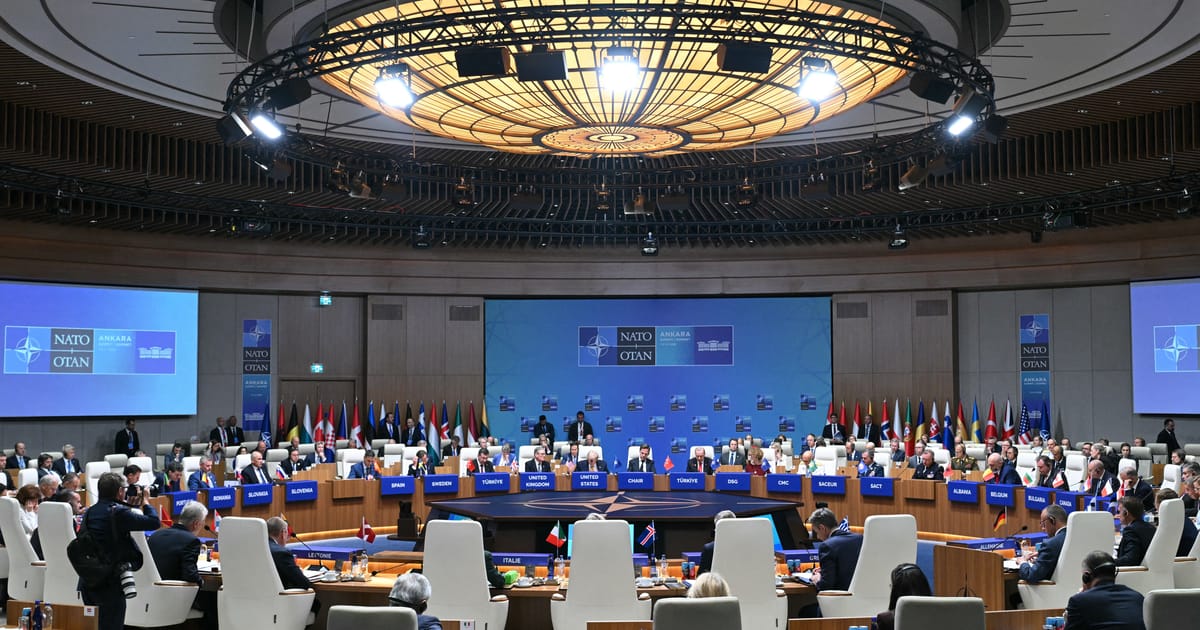
At this month’s NATO leaders’ summit in Ankara, alliance Secretary-General Mark Rutte hailed a deal as imminent.
“Allies are taking a historic step to enhance NATO’s fuel supply chain to ensure our forces have the energy supplies they need,” he told reporters. “While allies continue to finalize the details, we know that this €27 billion investment will modernize our existing fuel storage and distribution infrastructure.”
Despite that, Ankara has indicated it still wouldn’t green-light the proposal unless the 21 projects on Turkish territory are considered for fast-tracked funding, the diplomats said. Ankara’s push reflects the fact the largest share of funding will be disbursed in the first five years of the overhaul.
“They just want their projects brought forward, to the detriment of more mature plans in other allies,” said one of the diplomats. “Of course, Russia is the one happiest with these delays.”
NATO countries had previously disagreed over the high costs of the agreement — touted by diplomats as the alliance’s most expensive commonly funded project ever — while some fretted over the fact it would lock in fuel projects for decades. Capitals later agreed to drop their opposition to the scheme as eastern flank states in particular lobby hard for a rapid agreement.
Ankara’s move risks delaying an agreement on the pipeline extension until September, when NATO ambassadors will reconvene after the summer break, one of the diplomats said.
Turkey’s permanent representation to the alliance declined to comment. NATO referred POLITICO to Rutte’s remarks on the fuel pipeline agreement earlier this month at the summit.

Europa Monitor is a seasoned News Editor with over a decade of experience in journalism. Known for his editorial expertise and commitment to accuracy, Europa Monitor leads teams to deliver high-quality news content.