
Since then, however, Europe’s main natural gas benchmark, the TTF, has largely stayed below €50, a far cry from the €300 reached in the aftermath of the Russian invasion of Ukraine. But traders and analysts say that price doesn’t reflect confidence in supply, but rather a reluctance among traders to bet big on a conflict whose outcome is highly uncertain.
Internal guardrails against excessive risk provide a big deterrence. Trading firms have to calculate the theoretical loss from a trade if it goes south — the so-called ‘Value-at-Risk’ — and in this case, betting on significantly higher prices would exceed VaR thresholds for many firms, meaning many have since tapered back the huge bets made as the war broke out, said Seb Kennedy, the founder of market research firm Energy Flux, who identified the VaR dynamic last month.
But fresh signs that the supply situation is set to worsen might entice bullish traders to begin placing large bets again, said Kennedy, as Europe faces a triple squeeze on its supply from Asia, the U.S. and its own buyers.
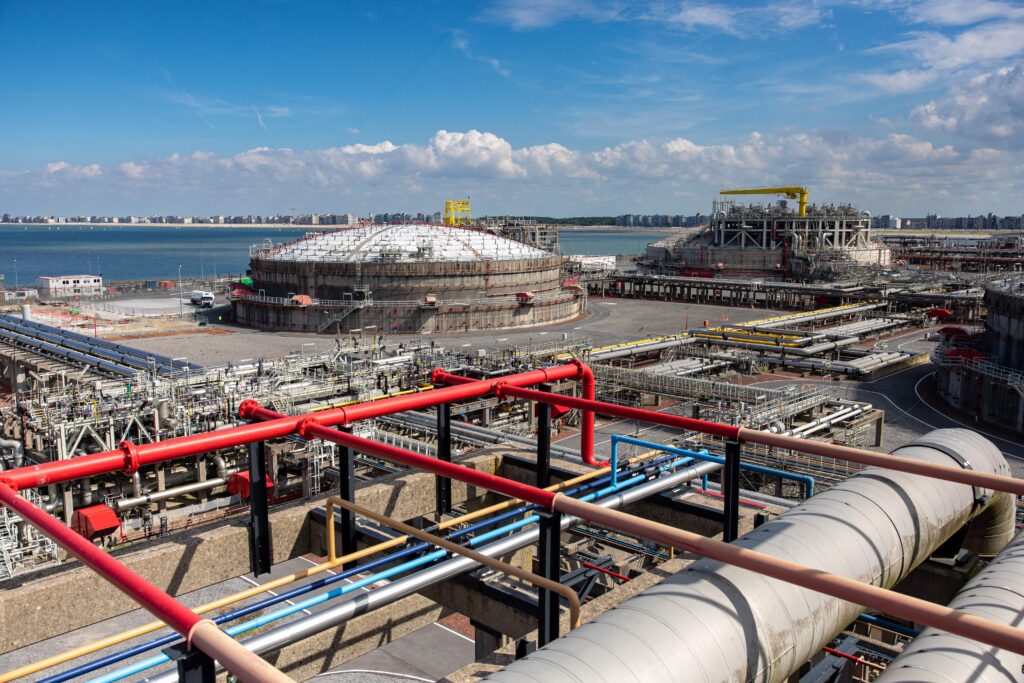
The key risk is Asian buyers. — which are particularly exposed to Hormuz. For the most part, these governments have relied on long-term contracts struck before the war to secure their supplies, selling the surplus into the spot market, much of which goes to Europe.
But as supplies become more squeezed, these countries — including China, one of the world’s largest importers — are increasingly turning to the spot market themselves, bringing the competition directly to Europe. The continent enjoys fewer long-term LNG contracts than Asian buyers, especially with U.S. suppliers, which only began to dramatically ramp up their exports to Europe after the invasion of Ukraine, according to Charlie Riedl, the executive director of LNG Center, which represents the U.S. LNG industry.
European countries have also been slower than usual in refilling their gas inventories. High prices have upended the usual incentive to sell gas into storage over the summer months, when it’s less profitable to sell, risking panic buying as the colder months approach, Riedl added.
All this might be fixable if the U.S. increased production to meet any looming shortfall. The country’s LNG sector has massively ramped up production to meet rising European and Asian demand since the outbreak of the war, but a hard limit has already been reached. The U.S. is at “full capacity” and will only be able to increase supply incrementally between now and 2031, said Riedl.
If competition intensifies, “we cannot help fix this supply crunch,” he said.

Europa Monitor is a seasoned News Editor with over a decade of experience in journalism. Known for his editorial expertise and commitment to accuracy, Europa Monitor leads teams to deliver high-quality news content.