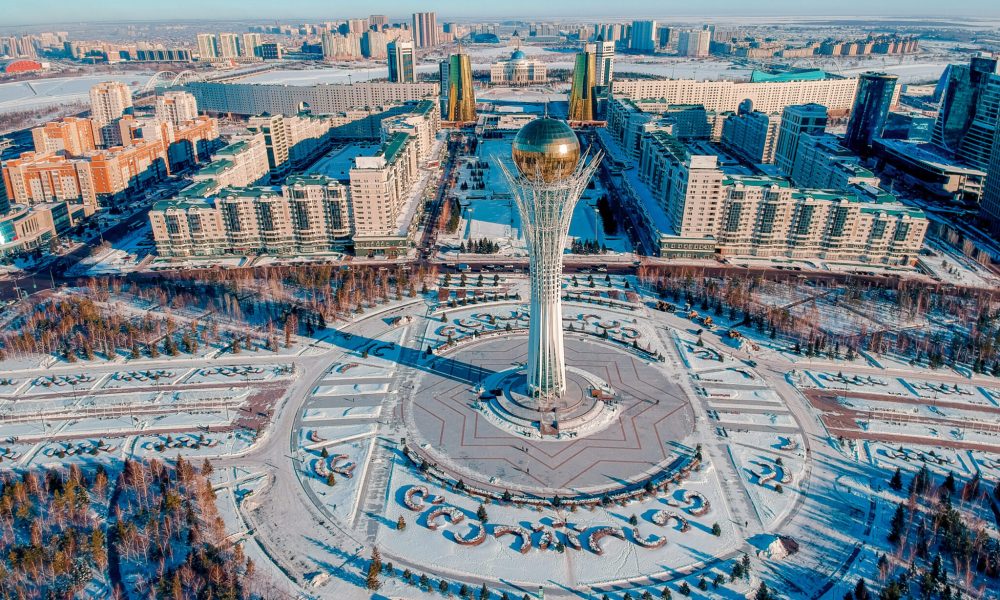
Parliamentary elections on 23 August completed the formation of Kazakhstan’s new legislature — the Kurultai — the central element of the country’s renewed political system following constitutional reform.
Seven political parties took part in the vote. Turnout stood at 74%.
The first convocation of the Kurultai has cemented the completion of the institutional transition and marked the country’s entry into a new political cycle.
Political Reforms and Their Institutional Foundations
The decisive factor enabling this far-reaching transformation of the political system has been President Kassym-Jomart Tokayev’s consistent course toward democratic renewal in Kazakhstan.
It was within this framework that constitutional amendments were initiated, the role of representative institutions expanded, political competition strengthened, and powers redistributed among the branches of government.
For European partners this carries particular significance: it demonstrates that the institutional overhaul was not ad hoc but systematic and phased, grounded in political will and a long-term reform strategy.
Kazakhstan in the Architecture of Engagement with the EU
For the European Union, Kazakhstan remains one of its key partners in Eurasia, primarily in the domains of energy, logistics, and raw materials.
The renewal of the institutional system enhances the predictability of engagement — a quality of particular importance for long-term European projects.
Energy Cooperation and Market Transformation
Energy continues to form one of the central pillars of Kazakhstan–EU relations.
Key avenues include:
- securing stable hydrocarbon supplies;
- advancing projects in hydrogen and renewable energy;
- joint initiatives on decarbonisation;
- expanding investment in green infrastructure.
Institutional stabilisation after the elections strengthens the durability of the contractual framework in the energy sector, while the new legislative structure facilitates the coordination of long-term economic initiatives.
Transport Corridors and Logistics
Special emphasis is placed on the development of the Trans-Caspian International Transport Route, which the EU regards as a strategic alternative to traditional trade arteries.
Kazakhstan plays a pivotal role by providing:
- transit infrastructure;
- connectivity between China, Central Asia, and Europe;
- development of the Caspian region’s port system;
- integration of logistics chains.
A stable institutional environment increases the investment attractiveness of these projects.
Institutional Predictability
The formation of the Kurultai creates a more transparent decision-making system, thereby reducing regulatory risks for European partners.
This is reflected in:
•growing investment activity;
- deeper intergovernmental engagement;
- more predictable long-term project planning;
- broader participation by European business.
The 23 August elections have concluded the phase of institutional renewal in Kazakhstan and opened the period of practical implementation of reforms.
For the European Union, this means a more predictable foundation for cooperation with Kazakhstan in the key spheres of energy, raw materials, and transport infrastructure.
Kazakhstan enters a new political cycle with an updated institutional system, reinforcing its position as a strategic partner of the EU in Eurasia
Share this article:

Europa Monitor is a seasoned News Editor with over a decade of experience in journalism. Known for his editorial expertise and commitment to accuracy, Europa Monitor leads teams to deliver high-quality news content.