Western support is “extremely important to Ukraine,” said Scott McClelland, the deputy director of Tekever’s defense unit. “This ultimately comes down to wider European security.”
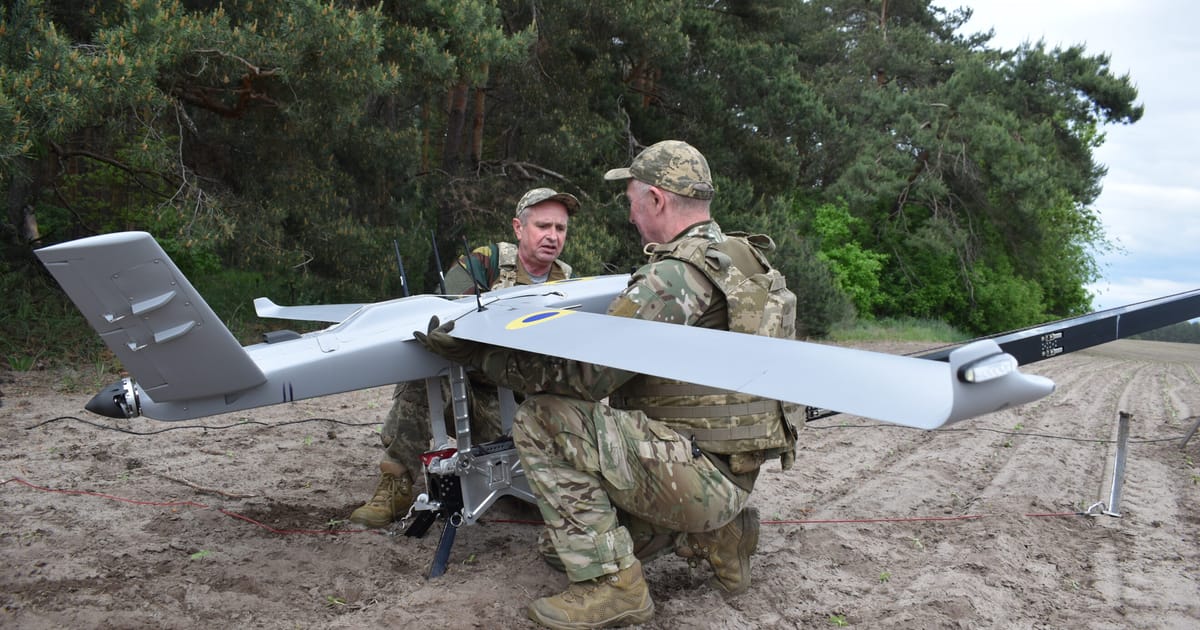
The U.K. is one of the largest suppliers of military aid and security assistance to Ukraine. It has committed more than $21 billion in military support since 2022, including 150,000 strike, reconnaissance and logistics drones this year. Tekever’s AR3, the specific cost of which the company declined to provide, is among the systems supplied through that support, along with drones from British drone makers Windracers and Malloy Aeronautics.
Sarmat’s unit received its first AR3 in early 2024 and learned to operate the aircraft from Tekever. But the conversation doesn’t end there.
Tekever maintains a secure hotline around the clock to answer questions from Ukrainian operators. The soldiers, in turn, test new technology in combat and tell the company what needs to change to make the drone more effective.
Exchanges like these, between troops and industry, have given rise to an accelerated development cycle driven by the brutal demands of modern warfare. A drone that works against Russian defenses today may struggle once Russia changes its jamming, detection or interception tactics. Manufacturers must then modify the aircraft before the advantage disappears.
McClelland said that the feedback from Ukraine allows Tekever to continually upgrade the drone. For instance, after the Black Forest Brigade requested a change to the AR3’s climb rate, the company modified the engine.

Europa Monitor is a seasoned News Editor with over a decade of experience in journalism. Known for his editorial expertise and commitment to accuracy, Europa Monitor leads teams to deliver high-quality news content.