France has one of the most energetic diplomatic agendas of any European power, but its long-established position in Africa has suffered heavily in recent years. Traditionally Paris concentrated on the French-speaking world, cultivating trade in West Africa and security partnerships in the Sahel. That comfortable position has been upended by the shifting politics of its former colonies, writes Felix Tih.
Since 2020, military coups in Mali, Niger and Burkina Faso have deposed pro-French governments, expelled French troops and torn up defence partnerships. Chad, France’s longest-standing defence partner on the continent, has ordered French forces out, while in the Central African Republic French influence has been eclipsed by Russian mercenaries. Even Senegal has judged French bases incompatible with sovereignty and secured a staggered withdrawal. Burkina Faso went further, severing diplomatic relations with Paris outright in June.
This upheaval has economic as well as strategic consequences. In 2025, Niger nationalised the uranium operations of French champion Orano, ending a half-century supply relationship. In Mozambique, TotalEnergies lost four-and-a-half years on its €17.5 billion gas project after a jihadist assault drove it to declare force majeure. France holds more than €61 billion in FDI stock in Africa; it urgently needs partners where capital is not hostage to insurgency or a colonel’s communiqué.
President Emmanuel Macron understands this. In May he convened the Africa Forward Summit in Nairobi with President William Ruto, the first Africa-France summit ever held in a country France did not colonize. Prior to this, Kenya’s National Assembly had ratified a five-year defence compact, giving Nairobi access to French training, technology and intelligence. Meanwhile, France now trades more with Anglophone Africa than with its Francophone former colonies, with Nigeria its largest sub-Saharan partner.
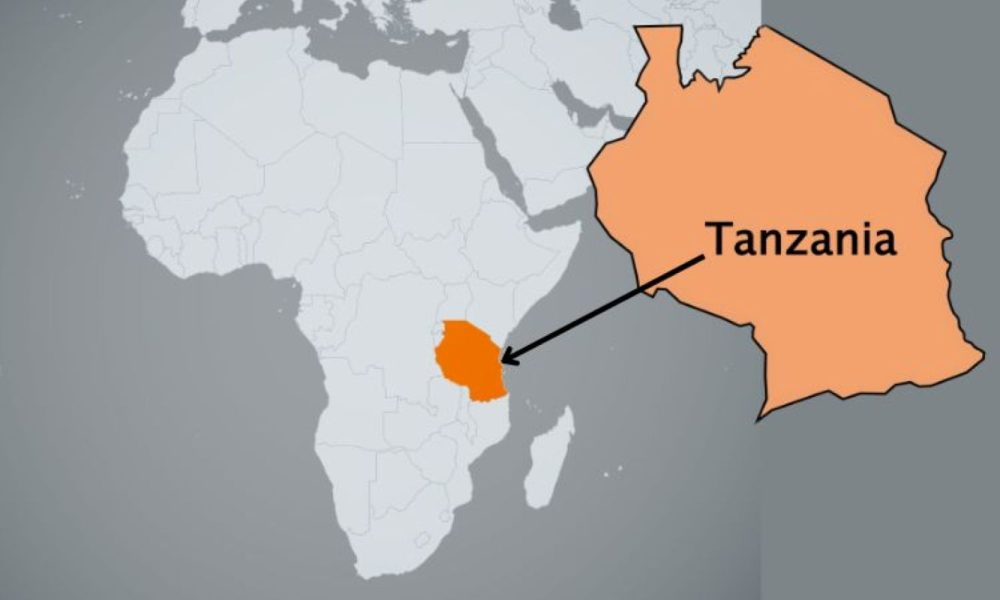
As Paris surveys the savannah, another country could catch its eye: Tanzania. In July, Tanzanian Prime Minister Dr Mwigulu Nchemba was in Paris for a Swahili Cultural Festival at UNESCO. While there he led a Tanzania-France Business Roundtable, telling French investors that the two countries’ relationship was shifting to a more commercially driven partnership based on investment, industrial development and value addition.
The visit was only the latest sign of warming relations between Paris and Dodoma. Since taking office in 2021, President Samia Suluhu Hassan has visited France twice, meeting Macron at the One Ocean Summit in Brest and again at the Élysée Palace in May 2024. The two governments then signed the Paris Declaration, setting out cooperation across energy, water, the blue economy, transport, agriculture and gender equality. The Agence Française de Développement now runs a portfolio worth roughly €1.3 billion in Tanzania, its largest in East Africa, including investments in water systems, transport links and energy access that already align closely with Samia’s development priorities.
Yet bilateral trade was worth only €111 million in 2023, leaving Tanzania France’s thirtieth-largest trading partner in sub-Saharan Africa. This gap between political warmth and commercial substance leaves an opportunity.
French firms are well equipped to seize the gap. Tanzania’s Development Vision 2050 targets a trillion-euro economy built on industrialization, logistics and value addition. Almost every pillar matches a French speciality. TotalEnergies’ East African Crude Oil Pipeline already terminates at Tanga, giving it a stake in Tanzania’s future as a regional export gateway. SAGEMCOM is laying fibre and supporting rural electrification. Bpifrance has signed an agreement with the Zanzibar Investment Promotion Authority to finance French co-investment, while Zanzibar’s ambitions as a financial and services hub create obvious space for French banks, insurers and advisory firms. Agriculture, which employs about 65 per cent of Tanzanians and contributes a quarter of GDP, needs the irrigation, cold chain and agro-processing capacity French engineering groups export elsewhere.
The minerals case is sharper still. In Paris, Nchemba invited French companies into graphite, lithium, uranium and rare earths, stressing that Tanzania wants refining and processing, not raw extraction. For a France scrambling to build critical mineral supply chains outside Chinese control, a stable supplier offering downstream partnership is exactly what industrial strategy requires. Tanzania’s offshore gas, meanwhile, will need pipelines, power plants and grid capacity long before its first liquefied natural gas cargo sails.
Security cooperation can follow the same logic. Tanzania has contributed troops to stabilisation missions in Mozambique and the Democratic Republic of Congo, giving it practical experience in precisely the theatres where France has interests but fewer reliable partners. France maintains forces at Réunion and Mayotte, patrolling the western Indian Ocean for anti-piracy and maritime surveillance. Tanzania’s coastline sits astride sea lanes carrying Gulf energy to Europe. A defence cooperation agreement on the Kenyan model, focused on maritime domain awareness, training and port access, would cost Paris little and buy real strategic depth.
Crucially, none of this carries colonial baggage. Tanzania is not a country where French troops are resented or French flags are burned. It is stable, non-aligned by conviction, and open for business. Macron has pledged €23.7 billion towards African investment and elevated Kenya to a strategic partner. Tanzania should be next.
Felix Tih is the editorial director of the Bantu Gazette. He previously worked as Africa News Coordinator for Anadolu Agency.
Share this article:

Europa Monitor is a seasoned News Editor with over a decade of experience in journalism. Known for his editorial expertise and commitment to accuracy, Europa Monitor leads teams to deliver high-quality news content.