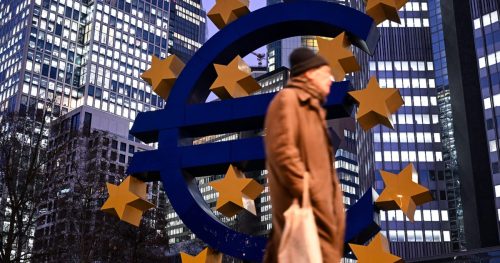
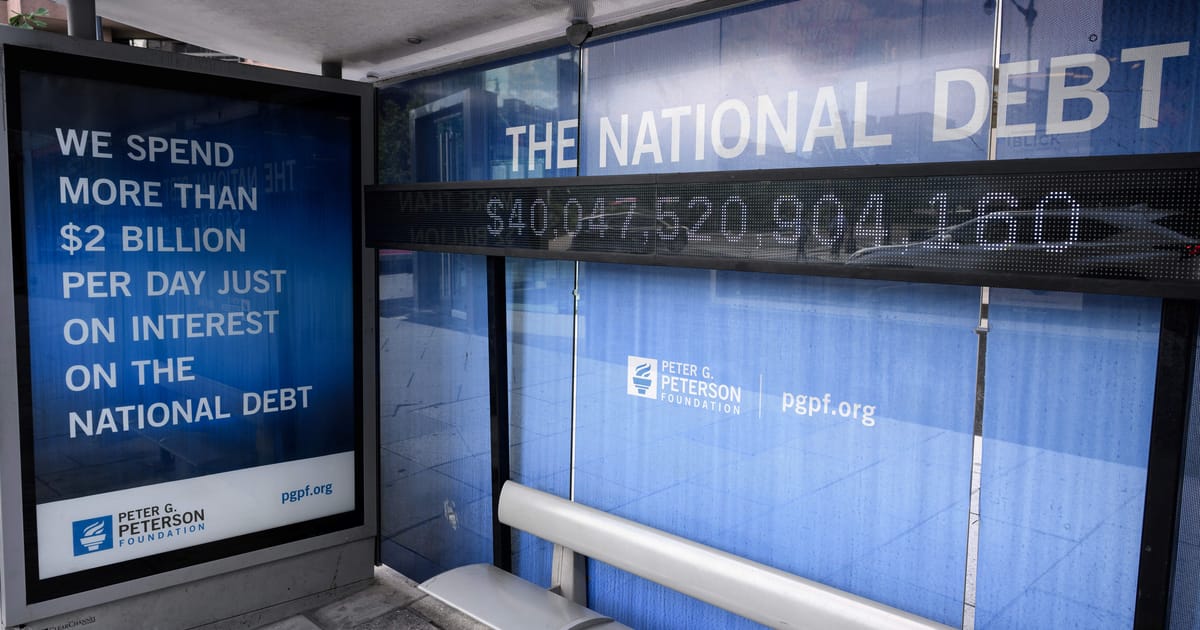
French national statistics office INSEE estimates that Paris’ spending on debt interest will more than quadruple in the current decade, from €30 billion in 2020 to €124 billion in 2030. That is money that could, under different circumstances, have gone to funding new hospitals, the green transition, rearmament — or even lower taxes.
France isn’t alone in having to deal with higher borrowing costs at an awkward moment in its political cycle. Italy’s Giorgia Meloni and Spain’s Pedro Sánchez are both up for re-election next year, and Finland, Greece, Estonia and Slovakia will also head to the polls (along with non-eurozone Poland).
Both Meloni and Sanchez can at least take some comfort from mitigating factors.
Italy’s debt service burden is much less acute, because its new bonds are not noticeably more expensive than what it was issuing a decade ago, when it still carried the stigma of the sovereign debt crisis.
And despite Sánchez not being able to pass a budget since 2022, the rapid population growth that his relaxed immigration regime has allowed has bolstered Spain’s gross domestic product and ensured that there are more shoulders to carry the debt burden in future. Spain’s debt is set to dip back below 100 percent of GDP this year, according to the Commission.
For now, the consensus is still that Europe is still far from a new debt crisis of its own. The combined eurozone budget deficit is only half that of the U.S., and the EU and ECB have plugged the worst of the institutional and regulatory gaps that gave rise to the sovereign debt crisis in 2010. Just as importantly, recent reforms enacted by Friedrich Merz’s government in Germany should help underpin growth both there and in the EU at large, according to Berenberg Bank chief economist Holger Schmieding.
But the unease is growing — especially in the light of the French situation.
“There is a potentially large danger zone, where the crisis may or may not happen, depending on the whims of investors,” Olivier Blanchard, formerly chief economist with the International Monetary Fund, said last week. “Given our debt and our deficit, we have probably entered the danger zone.”

Europa Monitor is a seasoned News Editor with over a decade of experience in journalism. Known for his editorial expertise and commitment to accuracy, Europa Monitor leads teams to deliver high-quality news content.