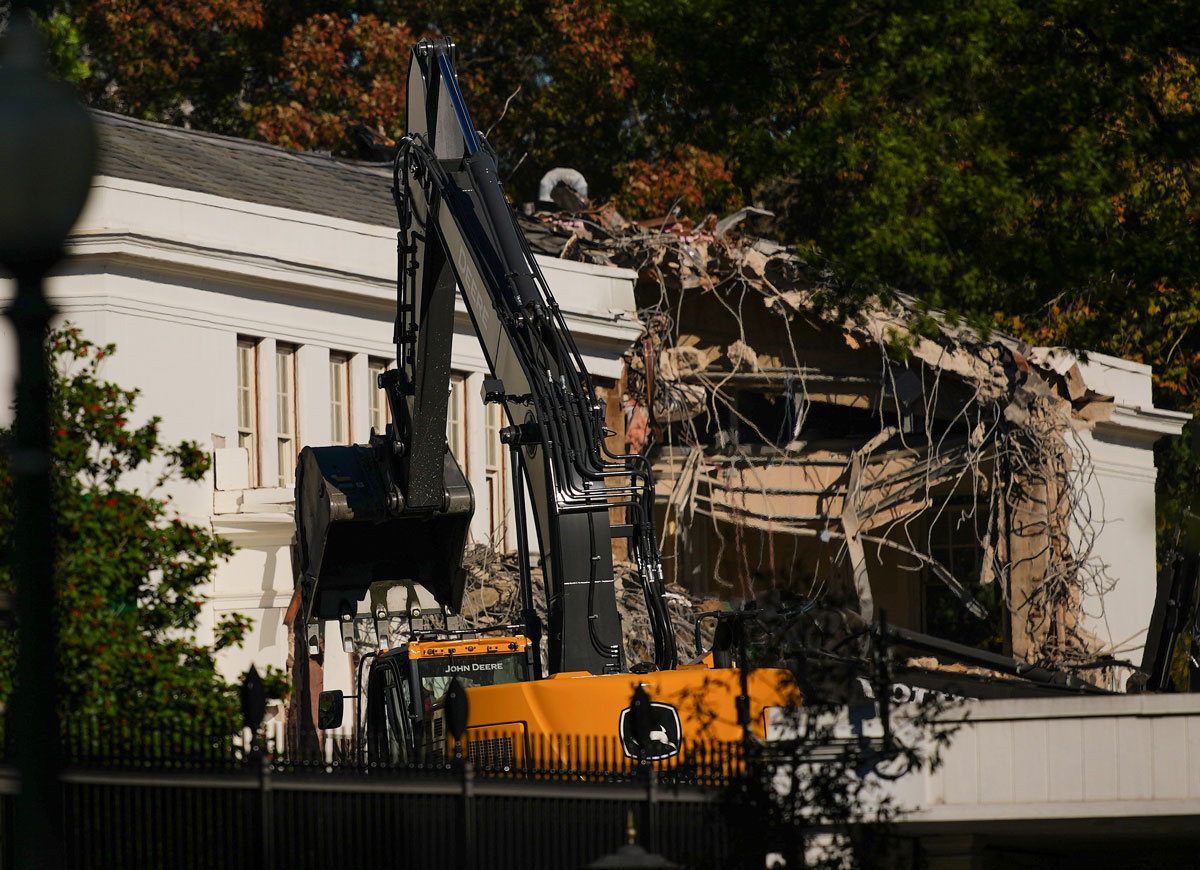
A deadly shooting outside the White House is now at the center of the Trump administration’s legal defense of a controversial $400 million ballroom expansion project.
In a new court filing, the Department of Justice argued the attack near a White House security checkpoint last weekend demonstrated the urgent need for what officials described as a heavily fortified ballroom connected to the East Wing.
“This second attack on the President this month underscores the critical need for top-level, state-of-the-art security at the White House,” the filing said.
The DOJ submitted the argument as part of an ongoing lawsuit brought by the National Trust for Historic Preservation, which is attempting to halt or alter the construction project. Preservation advocates argue the administration has failed to properly review the impact the expansion could have on the historic White House complex.
The filing came one day after Secret Service agents shot and killed 21-year-old Nasire Best of Maryland near 17th Street and Pennsylvania Avenue.
According to the Secret Service, Best “removed a weapon from his bag and began firing at posted officers.”
Journalists on White House grounds reported hearing multiple gunshots Saturday evening before being rushed into the briefing room and ordered to shelter in place.
Federal officials said the administration views the shooting as an attempted attack on President Donald Trump because of its proximity to the White House perimeter.
The DOJ filing described the ballroom as “vital for National Security” and said it would provide protection for presidents, staff members, foreign dignitaries and visitors attending large-scale events.
Trump administration officials have repeatedly argued that the current use of temporary tents for state dinners and media events creates security vulnerabilities.
The filing outlined several proposed security measures inside the ballroom complex, including bomb shelters, “bullet, ballistic and blast-proof glass,” missile-resistant columns and drone defense systems.
Officials also said the ballroom would have “the highest degree of bullet stoppage” and would be designed as a sealed structure to guard against airborne threats.
The administration linked the project to another recent security scare involving the White House Correspondents’ Dinner in April. Authorities accused Cole Allen of attempting to assassinate Trump after prosecutors said he traveled to Washington armed while the president attended the annual event. No shots were fired during that incident.
In the filing, the DOJ called the ballroom project “an invaluable gift from President Trump and many patriotic private donors who have given Hundreds of Millions of Dollars to build this Project.”
The National Trust for Historic Preservation has refused to withdraw its lawsuit despite pressure from the administration following both security incidents.
After the April case, the organization said it would continue pursuing legal action because it wanted the administration to “follow the law” regarding federal preservation requirements.
Construction on the ballroom is currently allowed to continue through June 5 while a federal court considers whether additional restrictions should be imposed.
The dispute has evolved beyond a debate over architecture and preservation. It now reflects broader political fights surrounding presidential security, executive authority and Trump’s effort to reshape the White House during his second term.

Europa Monitor is a seasoned News Editor with over a decade of experience in journalism. Known for his editorial expertise and commitment to accuracy, Europa Monitor leads teams to deliver high-quality news content.