BRUSSELS — EU countries are rethinking how they would respond if one of them is attacked — but those closest to Russia fear it could blur NATO’s role.
Kaja Kallas, the bloc’s top diplomat, will brief EU leaders on Thursday on Article 42.7 of the EU Treaty, which obliges member states to provide aid and assistance “by all the means in their power” if another EU country is attacked.
The problem: no one is quite sure how it would work. Officials are now gaming out how to use the clause in a crisis, underscoring growing unease about Europe’s security setup. When Cyprus was hit by Iranian drones last month, it didn’t invoke 42.7 at all.
That ambiguity is becoming harder to ignore. With fears of a potential Russian attack rising — and doubts about U.S. commitments under Donald Trump — some in Brussels want to clarify how the clause would operate. It has only been triggered once, by France after the 2015 terrorist attacks.
However, frontline countries are concerned that too much focus on 42.7 could impact NATO — the basis of their security. While the EU article is largely political and legal, NATO’s Article 5 would bring in alliance militaries, which have spent decades preparing and training together, along with the full power of the United States.
“EU efforts to engage more in the defense and security of Europe are welcome,” Latvian Defense Minister Andris Sprūds told POLITICO. He underlined that Article 42.7 should be “consistent with, but not in competition with NATO’s Article 5.”
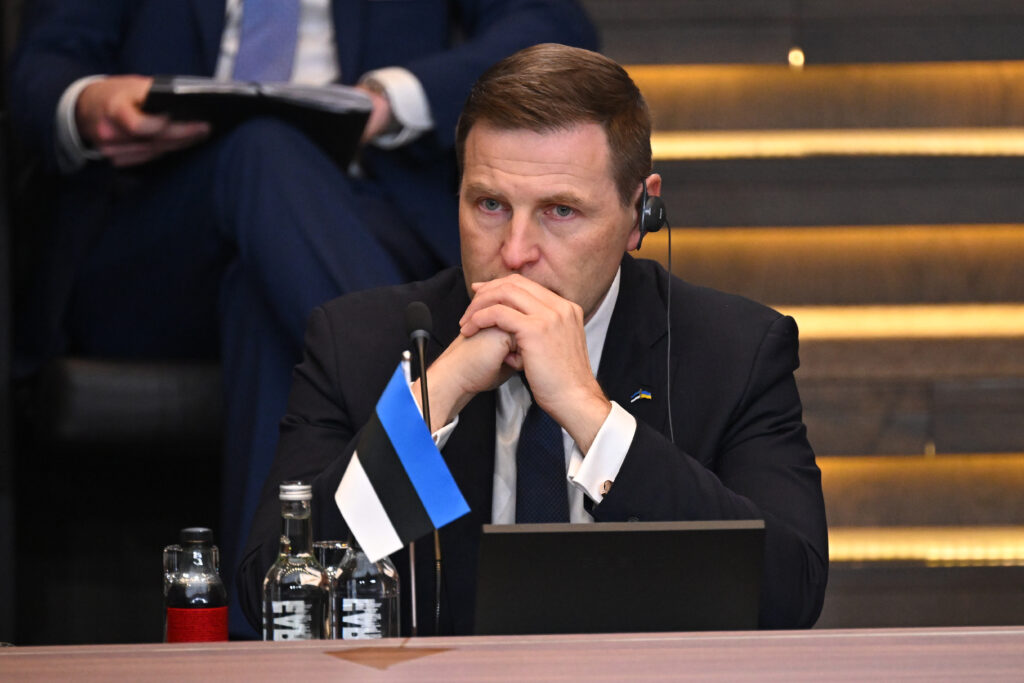
Hanno Pevkur, Estonia’s defense minister, called Article 5 “the bedrock of collective security,” describing Article 42.7 as “a vital expression of European solidarity,” but underlining that the NATO provision “holds the layer of operational military readiness that ensures our defense.”
As part of the effort to flesh out how 42.7 works, national ambassadors on the Political and Security Committee will hold a closed-door meeting on May 4, where they will take part in a table-top exercise on invoking the article.
They are expected to test a hybrid attack scenario where two member states, one in the south and one in the east, use the clause, two diplomats told POLITICO. But a third diplomat said other scenarios could also be tested.
The EU is trying to downplay the risk of sending any signal it’s trying to replace NATO.
The simulation by the Political and Security Committee, a Council body that deals with security and defense, is unlikely to play out a full military emergency like a Russian attack. “Our goal is to avoid crossing the line of a military attack,” said one diplomat.
EU defense ministers will run their own scenario later in May.
Angering Trump
Behind closed doors, diplomats worry that if the EU fleshes out 42.7, it could increase anti-NATO sentiment in Washington.
Trump has undermined Article 5 on multiple occasions. He warned the U.S. would not defend countries that don’t spend enough on defense, denigrated allied contributions to the NATO operation in Afghanistan and warned that the lack of enthusiasm about getting involved in the war he started against Iran is making him reconsider U.S. membership in the Atlantic alliance.
“Allies that still fail to do their part for collective defense will face consequences,” warned Defense Secretary Pete Hegseth, as the U.S. reportedly looks to punish allies falling short of Trump’s demands.
Despite mixed signals from Washington, vulnerable allies want to ensure the U.S. sticks with NATO.
“It is hard to rely on Article 5, but we all want to keep the alliance together,” argued a third EU diplomat.
Starting the conversation
There are growing calls to bring clarity to 42.7, including from Commission President Ursula Von der Leyen and German Chancellor Friedrich Merz.
This week’s effort to address Article 42.7 is being led by Cyprus, the host of the leaders’ meeting as it’s currently heading the rotating presidency of the Council of the EU. Cyprus is also one of the four EU countries that don’t belong to NATO, which means it’s not covered by Article 5.
Cyprus did not invoke 42.7 after the drone attacks. But Greece, France, Italy, Spain, and the Netherlands responded quickly to Cypriot requests for assistance by deploying assets; Christodoulides said still amounted to a test of the effectiveness of Article 42.7.
“We’re going to have a discussion and prepare, let’s say, an operational plan of what is going to happen in case a member state triggers this article,” Christodoulides told The Associated Press ahead of the meeting.
Christodoulides said because most EU countries also belong to NATO, there should be an effort to clarify how they would respond to Article 42.7 without clashing with their NATO obligations.
For a country like Estonia, NATO’s Article 5 is still seen as the key security guarantee.
The EU article is “a powerful political complement to, not a replacement for, the robust military guarantees provided by NATO,” said Pevkur.
This article has been updated.

Europa Monitor is a seasoned News Editor with over a decade of experience in journalism. Known for his editorial expertise and commitment to accuracy, Europa Monitor leads teams to deliver high-quality news content.