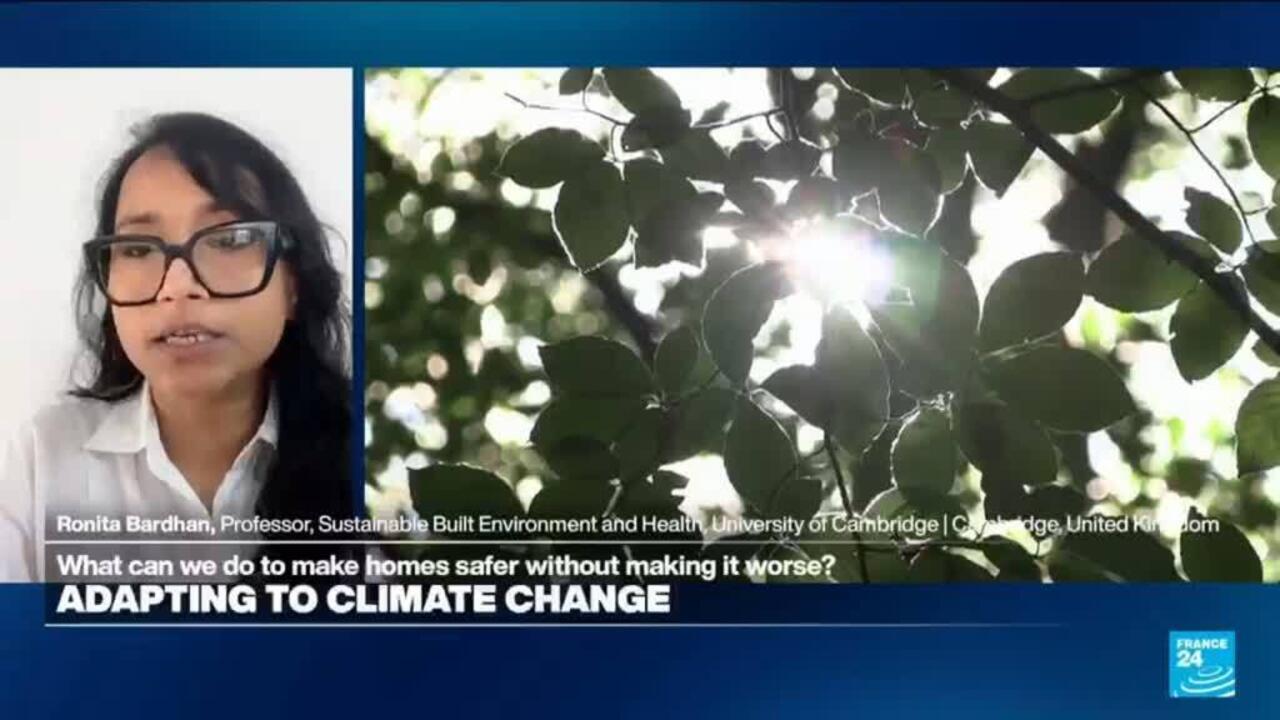
Eve Irvine is pleased to welcome Ronita Bardhan, Professor of Sustainable Built Environment and Health at the University of Cambridge. Extreme heat is no longer simply a question of climate exposure. It is a question of thermal safety, public health, energy security, urban design and inequality, explains Professor Bardhan. Her starting point is that, in an emergency, protecting human life must come first: people need immediate access to cooling, through shade, hydration, cooling centres, passive design or, where necessary, air conditioning. But relying on air conditioning as our principal response creates new vulnerabilities. Mass mechanical cooling can intensify pressure on already strained energy systems, increase carbon emissions and contribute to urban heat island effects – effectively producing additional heat within the very cities we are trying to cool. The challenge, she says, is not to choose between adaptation and mitigation, but to pursue both simultaneously.

Europa Monitor is a seasoned News Editor with over a decade of experience in journalism. Known for his editorial expertise and commitment to accuracy, Europa Monitor leads teams to deliver high-quality news content.