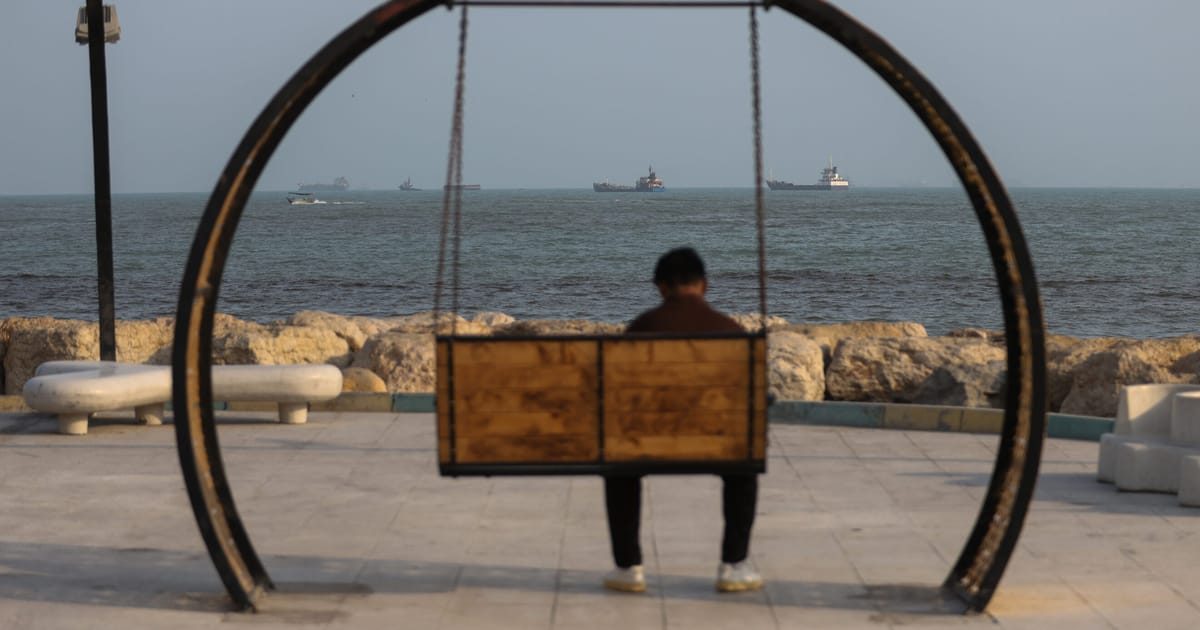
“There are no talks or conversations going on, or scheduled, with the Islamic Republic of Iran. The Naval Blockade remains in full force and effect. The Hormuz Strait is open and operating. All water mines have been removed or detonated. Thank you for your attention to this matter!” Trump wrote on Truth Social.
A senior White House official, granted anonymity to discuss the situation in Iran, insisted that Iran will cave long before the pain in the U.S. or world markets become intolerable.
“Ultimately we want a deal, but in the interim, the Iranian economy is tanking … people are lining up for gas, just for a half gallon of gas. And there’s a lot of civil unrest going on in Iran, that’s not being played on the news for whatever reason,” the official said late last week. “We’re fine if that’s the route they want to take.”
Still, there are signs inside the White House that the economic impacts are a growing concern. Vice President JD Vance last week said on Fox News that the administration’s first goal in the Iran war was to “keep oil and gas cheap for Americans all over the country.” The president, meanwhile, has repeatedly insisted voters will bear the pain of higher gas prices for an end to Iran’s nuclear ambitions.
The voters have a more dyspeptic view. A Reuters/Ipsos survey released this week showed Trump’s approval rating at 33 percent, the lowest level of his presidency. Roughly 80 percent of Americans — 87 percent of Democrats and 71 percent of Republicans — think U.S. involvement in Iran “will go on for an extended period of time,” the poll found.
But some former Trump administration officials, however, are holding out hope that patience will be rewarded and that the administration’s economic pressure campaign will work, in part because they see the other options on the table, including putting U.S. boots on the ground in Iran, as politically untenable.
Fred Fleitz, Trump’s former National Security Council chief of staff and vice chair of the American First Policy Institute’s American Security, predicted that the U.S. could be “dealing with a different Iran” in 30 to 60 days.
“I think patience is the best approach,” Fleitz said. “I don’t believe that a large-scale military attack right now is going to make a difference in changing the regime’s position, and I strongly oppose the idea of seizing Kharg Island or sending in American troops. The American people don’t want that. That would really bog us down in a quagmire.”

Europa Monitor is a seasoned News Editor with over a decade of experience in journalism. Known for his editorial expertise and commitment to accuracy, Europa Monitor leads teams to deliver high-quality news content.