
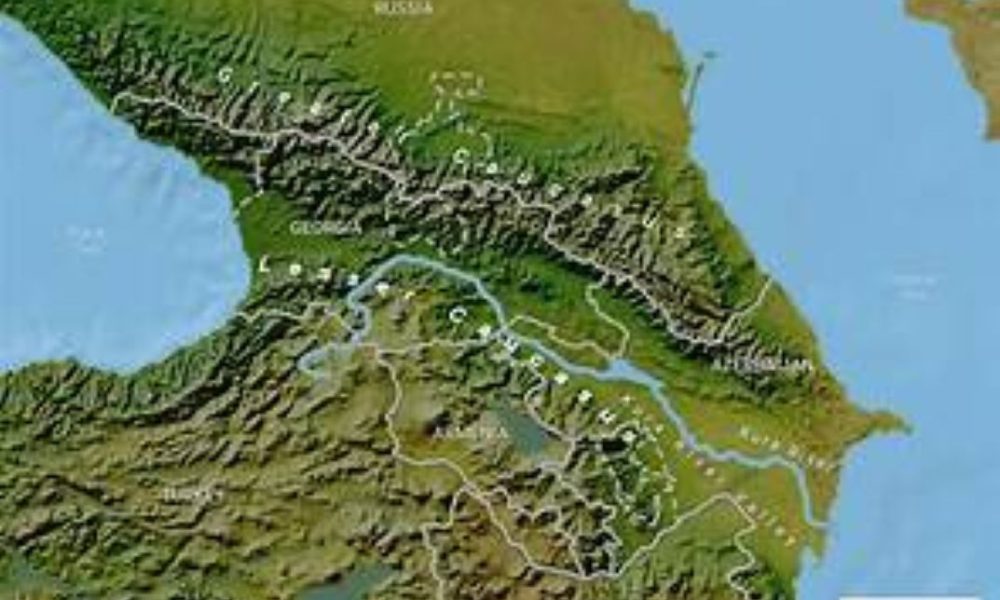
For many years, the security environment of the South Caucasus has been shaped by the Armenia-Azerbaijan conflict, the prolonged status quo surrounding Georgia’s Abkhazia and South Ossetia regions, interstate relations within the region and the foreign policy strategies pursued by the regional states, the competing regional agendas of major powers, the region’s pronounced ethnic heterogeneity, and geopolitical competition over energy resources and transport corridors. However, the 2020 war, Azerbaijan’s restoration of full control over its internationally recognized territories in 2023, and the progress achieved in border delimitation and the peace agenda between 2024 and 2026 have fundamentally altered the regional security architecture. Today, the South Caucasus is increasingly evolving from a zone of confrontation into a space where post-conflict stabilization, transport integration, energy security, and opportunities for multilateral cooperation converge. The current dynamics suggest that the emergence of a de facto peace between Armenia and Azerbaijan represents not only a turning point in bilateral relations but also a significant strategic impetus for mitigating other security challenges across the region, writes Dr. Matin Mammadli, Head of Department at the Baku-based Center of Analysis of İnternational Relations (AIR Center).
The factors shaping the security environment of the South Caucasus may primarily be classified into four broad categories: regional conflicts, interstate relations, the competing interests of major powers, and other security risks. For decades, the Armenia-Azerbaijan conflict constituted the principal source of instability in the region. That conflict has now been resolved. Nevertheless, it has never been the only hard security challenge facing the South Caucasus. The unresolved conflicts surrounding Georgia’s Abkhazia and South Ossetia regions remain active sources of instability, and their continued existence continues to exert a negative influence on the regional security environment.
A second major factor concerns relations among the regional states. Azerbaijan-Georgia relations continue to possess strategic significance in political, energy, and transit dimensions. Meanwhile, Armenia-Azerbaijan relations have, for decades, been the principal determinant of the regional security agenda. At present, a de facto peace has emerged between the two countries, while negotiations aimed at institutionalizing this peace continue. More recently, efforts toward the normalization of Türkiye-Armenia relations have become an additional component of this evolving regional landscape. At the same time, Armenia’s decision to suspend its participation in the Collective Security Treaty Organization (CSTO) from 2024 onward and its attempts to rebalance its external security partnerships, together with Azerbaijan’s expanding geopolitical room for manoeuvre, have introduced a new dynamic into intra-regional relations.
The third major factor is the regional policies and competing interests of major powers. The principal external actors with geopolitical, economic, and strategic interests in the South Caucasus include Russia, Iran, Türkiye, the United States, the European Union, and China. In addition to these actors, Saudi Arabia, Pakistan, and Japan may also be regarded as states possessing interests in the region. However, their relatively limited capacity to influence regional developments, together with the differing nature and scope of their interests, precludes their classification as principal centres of power in the South Caucasus. From a historical perspective, Russia, Iran, and Türkiye may be considered the region’s traditional actors, whereas the United States, the European Union, and China represent comparatively newer participants in the regional geopolitical landscape.
The Institutionalization of the Peace Process
Several significant developments deserve particular attention in relation to the institutional consolidation of the new regional order that has emerged since 2020. On 13 March 2025, both Baku and Yerevan officially announced that they had reached agreement on the text of a peace treaty. Subsequently, on 8 August 2025, the draft treaty was initialled in Washington, where a political declaration was also signed. As a logical continuation of this process, the OSCE Minsk Process and its associated institutional structures were formally terminated by the end of 2025. Furthermore, the signing and subsequent ratification by both countries of the regulations governing the work of the border delimitation commissions in 2024, together with progress achieved in the delimitation process and the return of four Azerbaijani villages, demonstrated a growing level of legal and political confidence between the two states.
There are now substantial grounds for referring to the existing situation as one of de facto peace. Armenian Prime Minister Nikol Pashinyan recently stated that 2025 was the first full calendar year since 1991 during which no casualties were recorded along the Armenia-Azerbaijan border, adding that, for several months, no gunfire had been heard in border settlements . In May 2026, the European Union likewise reaffirmed its support for the further institutionalization of peace by identifying the signing and ratification of the peace agreement as a strategic priority . It is therefore reasonable to conclude that a de facto peace environment has emerged between Armenia and Azerbaijan. Nevertheless, the formalization of this peace de jure still depends upon the final signing and ratification of the peace agreement.
Azerbaijan’s growing role and emerging opportunities
One of the principal factors underpinning the new geopolitical realities is the substantial strengthening of Azerbaijan’s position as a leading regional power. This enhanced role is not attributable solely to military and political developments; a significant part of it stems from the country’s growing importance in the geopolitics of energy and connectivity. Azerbaijan currently exports natural gas to sixteen countries, making it one of the most geographically diversified gas exporters in the world . Notably, ten of these sixteen destination countries are European states.
Transport and trade connectivity constitute the second pillar reinforcing Azerbaijan’s geopolitical significance. In 2023, the World Bank underscored the strategic importance of the Middle Corridor as a multimodal route linking China and Europe through Central Asia and the South Caucasus . The European Commission further stated in February 2026 that trade volumes along this route had increased fourfold since 2022 and could expand even further by 2030 with appropriate investment . Within this evolving framework, Azerbaijan is increasingly assuming the role of a key geoeconomic hub connecting the Caspian region, Central Asia, the Black Sea, and Europe. At the same time, the deepening alliance with Türkiye on the basis of the Shusha Declaration has strengthened the security foundations of this strategic role.
For this reason, Azerbaijan’s growing influence in the post-2020 and post-2023 period is reshaping not only the regional balance of power but also enhancing the prospects for a sustainable peace dividend. Should the peace agenda continue to advance, Azerbaijan, through its capabilities in energy, transit, post-conflict reconstruction, and diplomacy, will be well positioned to contribute to the transformation of the South Caucasus from a zone of confrontation into one of cooperation. From the current perspective, such an outcome appears to be a realistic possibility.
Nevertheless, several adverse factors continue to affect the security environment of the South Caucasus. The persistent tensions surrounding Georgia’s Abkhazia and South Ossetia regions remain another unresolved security challenge in the region. Both unresolved conflicts retain the potential to trigger an open escalation between Georgia and Russia. At the same time, Armenia’s ongoing efforts to restructure its foreign and security policy may generate additional risks of regional confrontation. Although the country has suspended its participation in the Collective Security Treaty Organization (CSTO), Russia continues to maintain its military base in Gyumri, while Russian border guards remain responsible for securing significant sections of Armenia’s frontiers. Iran also continues to demonstrate considerable sensitivity regarding regional border arrangements and transport connectivity. This approach should likewise be regarded as one of the factors capable of increasing tensions in the region. Furthermore, landmine contamination remains one of the most serious humanitarian constraints on post-conflict recovery in Azerbaijan. According to the United Nations Mine Action Service (UNMAS) and Azerbaijani officials, more than 13 per cent of the country’s territory remained affected by landmine contamination in 2025, while hundreds of mine-related casualties have been recorded since November 2020 .
Despite these challenges, the peace taking shape between Armenia and Azerbaijan has the potential to produce positive spillover effects on other regional issues. This should not be interpreted as a definitive conclusion but rather as a well-founded analytical assessment based on current developments. If the peace agreement is formally signed and ratified, the need for external military balancing within the region is likely to diminish, economic interdependence is expected to increase, the legal clarification of interstate borders will accelerate, and additional political momentum may emerge for the normalization of relations between Türkiye and Armenia. One important point should also be emphasized. For these positive developments to materialize in the foreseeable future, Armenia must replace its current Constitution-which contains territorial claims against Azerbaijan and remains the principal obstacle to the signing of the peace agreement-with a new constitutional framework. Such a development could redirect the overall security agenda of the South Caucasus away from conflict and towards cooperation.
Against the backdrop of these changing realities, the security environment of the South Caucasus is increasingly characterized by transition, reconstruction, and regional integration rather than by the patterns that dominated previous decades. Following the developments of 2020 and 2023, the Armenia-Azerbaijan conflict-previously the single most significant source of instability affecting the region’s security environment-has been resolved, and the South Caucasus has entered a post-conflict phase. Azerbaijan’s strengthened position as a leading regional actor, its expanding central role in regional energy and transport connectivity, the emergence of a de facto peace between Armenia and Azerbaijan, and the growing expectations regarding the de jure consolidation of that peace have together created a new strategic window of opportunity for the South Caucasus.
If this positive trajectory is reinforced through the conclusion of a comprehensive peace agreement, the reopening of regional communications, humanitarian demining, border delimitation, and sustained confidence-building measures, the South Caucasus has the potential to evolve into one of the regions possessing a considerably stronger and more stable security environment.
https://www.primeminister.am/en/statements-and-messages/item/2026/03/11/Nikol-Pashinyan-Speech/
https://www.consilium.europa.eu/en/policies/armenia/
https://azertag.az/en/xeber/president_ilham_aliyev_we_now_export_natural_gas_to_16_countries_10_of_which_are_eu_members-3976239
https://www.worldbank.org/en/news/press-release/2023/11/27/middle-corridor-through-central-asia-caucasus-can-boost-trade-connectivity-and-supply-chain-resilience
https://www.brusselstimes.com/1958106/trans-caspian-corridors-europe-asia-trade-quadrupled-since-2022
https://un.mfa.gov.az/en/news/press-04042026-en
Share this article:

Europa Monitor is a seasoned News Editor with over a decade of experience in journalism. Known for his editorial expertise and commitment to accuracy, Europa Monitor leads teams to deliver high-quality news content.