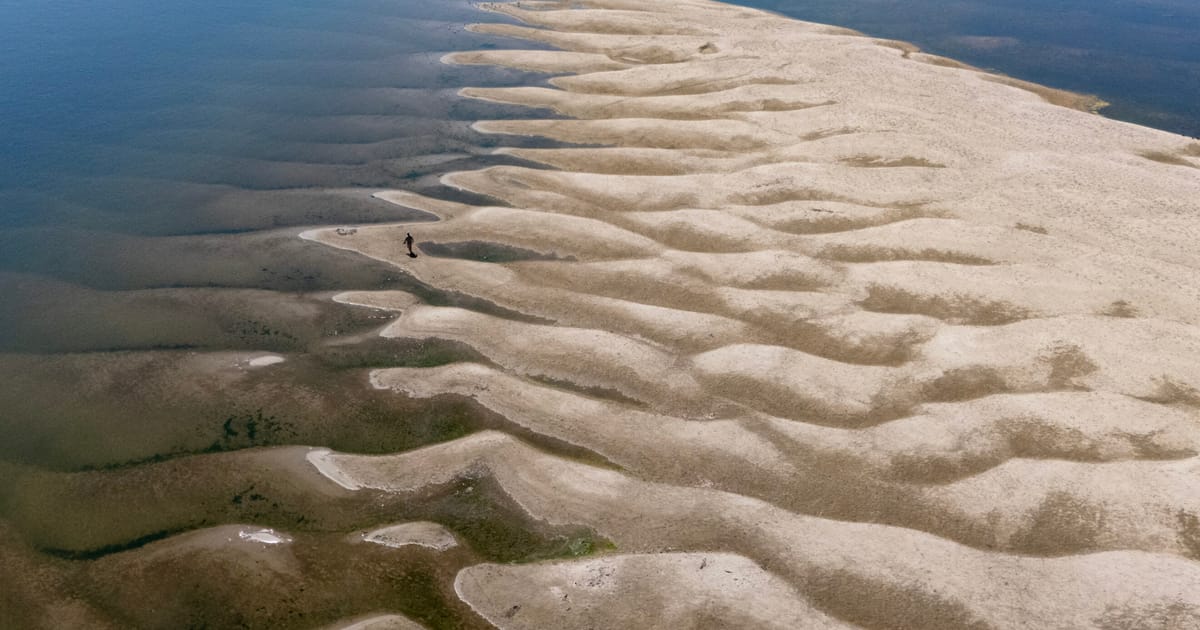
“The prediction is that this will occur more often, and we need to look more systematically at water availability, water demands, and of course retention and resilience,” said Birgit Vogel, executive secretary for the International Commission for the Protection of the Danube River, which coordinates cooperation among countries across the basin.
With drought becoming a recurring threat, Europe still doesn’t have a unified, binding policy to confront water shortages in the Danube and beyond. Responsibility remains split between national governments and river basin authorities, regulated by a patchwork of EU laws that green groups say are poorly enforced. Many of the bloc’s new resilience measures remain voluntary.
Against that backdrop, national authorities are resorting to unilateral measures that, some argue, could wreak havoc on their neighbors and nearby ecosystems.
Dimiter Koumanov, head of environmental protection at Bulgarian river NGO Balkanka, argues that countries are taking emergency action without considering the broader consequences. He is particularly concerned about the potential impact of such measures on Bulgaria’s drinking water.
Danube countries are “doing everything they wish, and we in Bulgaria are paying the price,” he said.
High stakes, low rivers
“This summer has been another reminder that Europe is badly underprepared for climate change,” said Sara Johansson, water policy expert at the European Environmental Bureau. “Drying soils, degraded wetlands and destroyed ecosystems are turning landscapes into tinderboxes ready to ignite, while depleted rivers have exposed the vulnerability of our energy system.”

Europa Monitor is a seasoned News Editor with over a decade of experience in journalism. Known for his editorial expertise and commitment to accuracy, Europa Monitor leads teams to deliver high-quality news content.