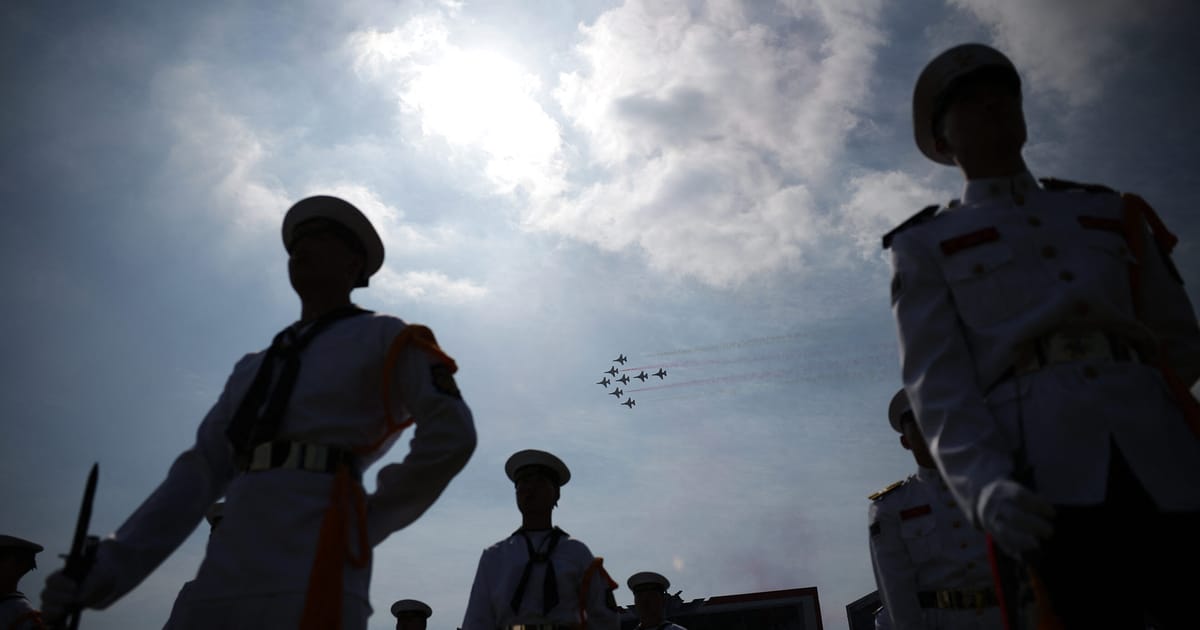
Romania has since become another large customer, buying 54 K9 howitzers and 36 K10 ammunition resupply vehicles. The deal included Hanwha Aerospace setting up production in Romania.
Korean firms have also made sales to Estonia, Norway and Finland — largely for K9 howitzers.
“Baltic and Eastern European countries were the first ones to reassess their capability needs following Russia’s annexation of Crimea” in 2014, said Kévin Martin, a researcher at the Paris-based Foundation for Strategic Research. He said that the K9 was one of the few artillery systems on the market that met their demands.
South Korean equipment is attractive because it’s delivered quickly, meets European countries’ operational requirements and is compliant with NATO standards, he added.
South Korea is also gaining market share thanks to growing European worries about being too reliant on the U.S. as President Donald Trump questions his country’s traditional security relationship with the continent, he said.
South Korea could benefit from the new €150 billion Security Action for Europe loans-for-weapons scheme. However, because of pressure to favor the bloc’s own industry, third-country companies can account for only 35 percent of the final value of weapons systems financed by the program.

Europa Monitor is a seasoned News Editor with over a decade of experience in journalism. Known for his editorial expertise and commitment to accuracy, Europa Monitor leads teams to deliver high-quality news content.