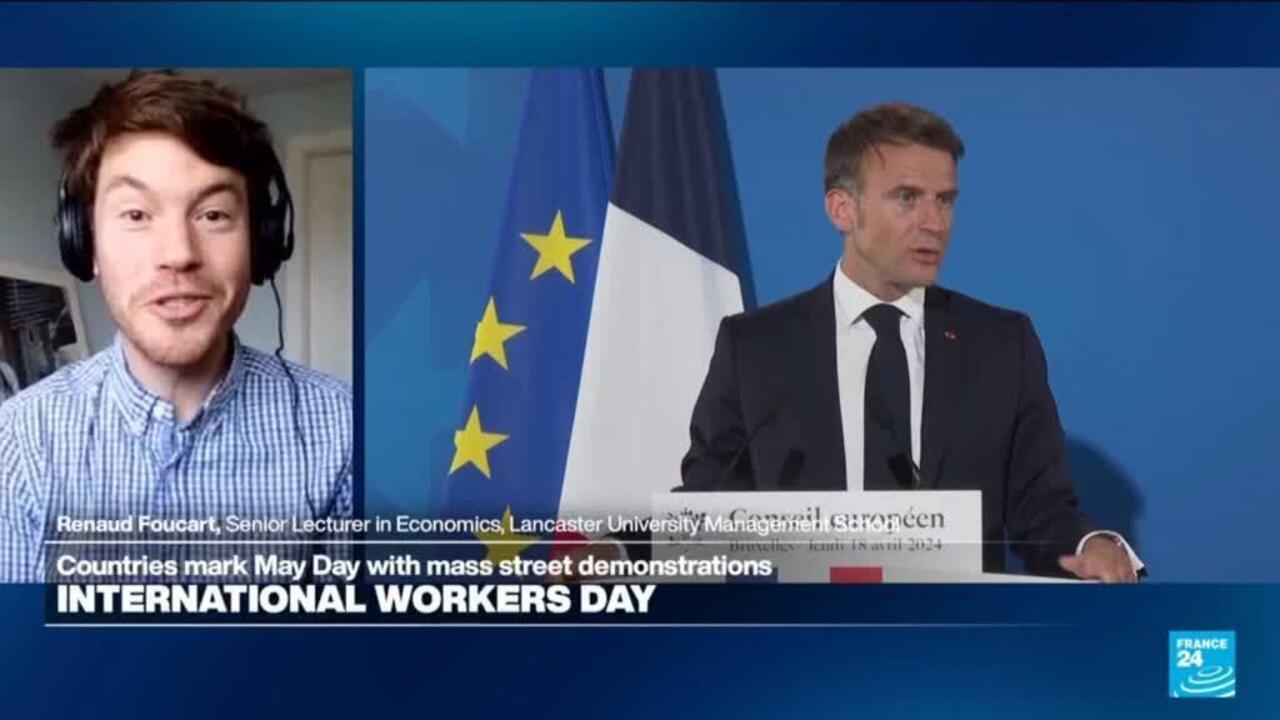
On this May Day, as France remains suspended in political paralysis, Alison Sargent welcomes Dr Renaud Foucart, Senior Lecturer in Economics at Lancaster University Management School. As International Workers’ Day is commemorated across the globe, Dr Foucart offers a sobering analysis of France’s sociopolitical and economic challenges that lie ahead in the lead-up to the 2027 presidential election. While France debates whether bakeries and florists should even be open on the 1st of May, Dr. Foucart asks if it “still makes sense to have this sacred day where labor is not allowed?” Dr. Foucart frames these debates within a broader institutional fragility. “There is no political majority in France right now,” he observes, pointing to recent policy reversals not as ideological victories but as symptoms of a government unable to act decisively. All the while, “this 1st of May is kind of a victory lap” for the unions. Yet beyond France’s borders, external shocks reshape domestic realities. Soaring living costs, he notes, owe “more to Donald Trump and Benjamin Netanyahu deciding to bomb Iran than to domestic issues.” It is a stark reminder of the limits of national politics in an interconnected world. Meanwhile, fractures within the far right, and among the left-wing parties have created a volatile and unpredictable political landscape in the lead-up to next year’s general election.In the meantime, Prime Minister Lecornu is fulfilling his role of “doing exactly nothing.” Macron reappointed Sébastien Lecornu as PM with one objective in mind: “not to offend anyone and not to have any kind of break of government before the presidential election.” This all but assures that the next president will inherit series of deferred crises. and so with all the hard choices postponed, “whoever is in charge next year will be immediately highly unpopular, just like Macron is at the moment.”

Europa Monitor is a seasoned News Editor with over a decade of experience in journalism. Known for his editorial expertise and commitment to accuracy, Europa Monitor leads teams to deliver high-quality news content.