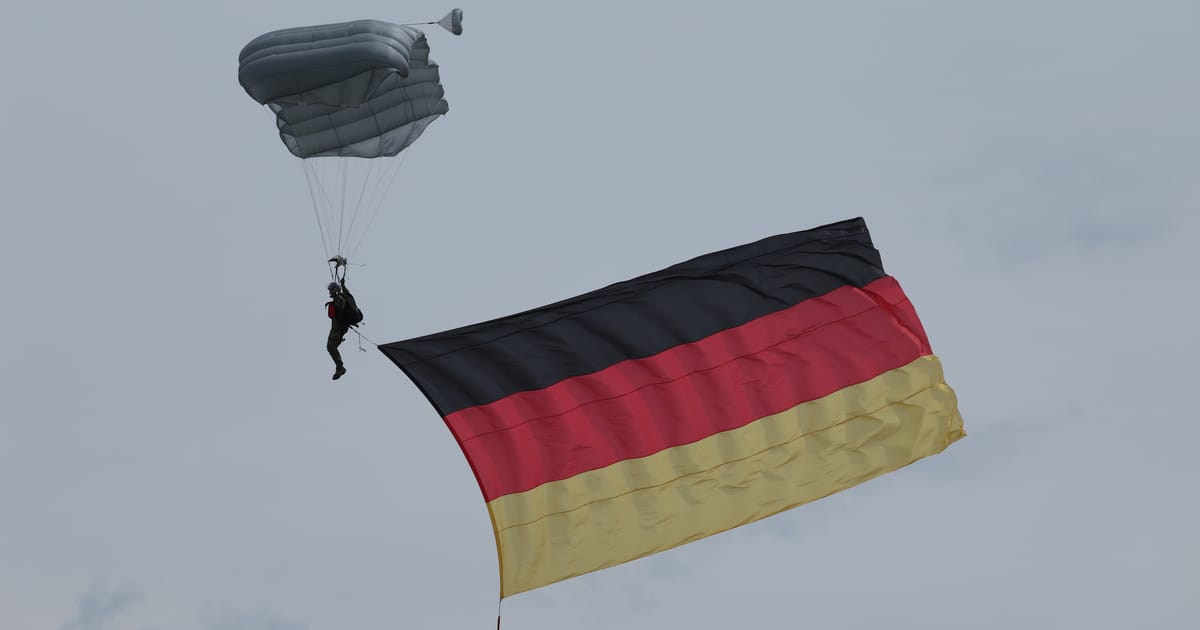
Under NATO’s definition, Germany overtook France in defense spending in 2019, when Berlin spent €46.9 billion compared with France’s €44.2 billion.
By 2029, Germany is expected to spend €153 billion a year on defense. That’s about 3.5 percent of GDP, in line with NATO’s target for 2035 and the country’s most ambitious military expansion since reunification. France, by comparison, plans to reach €72.8 billion in 2029 thanks to an updated military planning law now before the French parliament.
France faces far tighter fiscal constraints, and budget watchdogs warn that the extra defense effort could mean politically fraught social spending cuts. Germany’s public debt is 63.5 percent of GDP, while France’s stands at 115.6 percent.
While Paris faces financial headwinds, it does have tech experience. The Rafale was developed by Dassault, and the company helped finance it thanks to strong export sales; the United Arab Emirates’ 2021 order for 80 Rafale F4 jets was a massive cash injection.
But if it wants to develop its own sixth-generation fighter, as Dassault CEO Éric Trappier repeatedly said his company had the capacity to do, it will have to lock in future exports. The overall FCAS program has been valued at around €100 billion, a scale that would be challenging for France to finance alone.
But exports also carry risks. Paris had hoped Abu Dhabi would help finance the Rafale F5 upgrade, but talks collapsed after the Emirates sought deeper involvement in development and access to advanced technologies, according to La Tribune.

Europa Monitor is a seasoned News Editor with over a decade of experience in journalism. Known for his editorial expertise and commitment to accuracy, Europa Monitor leads teams to deliver high-quality news content.