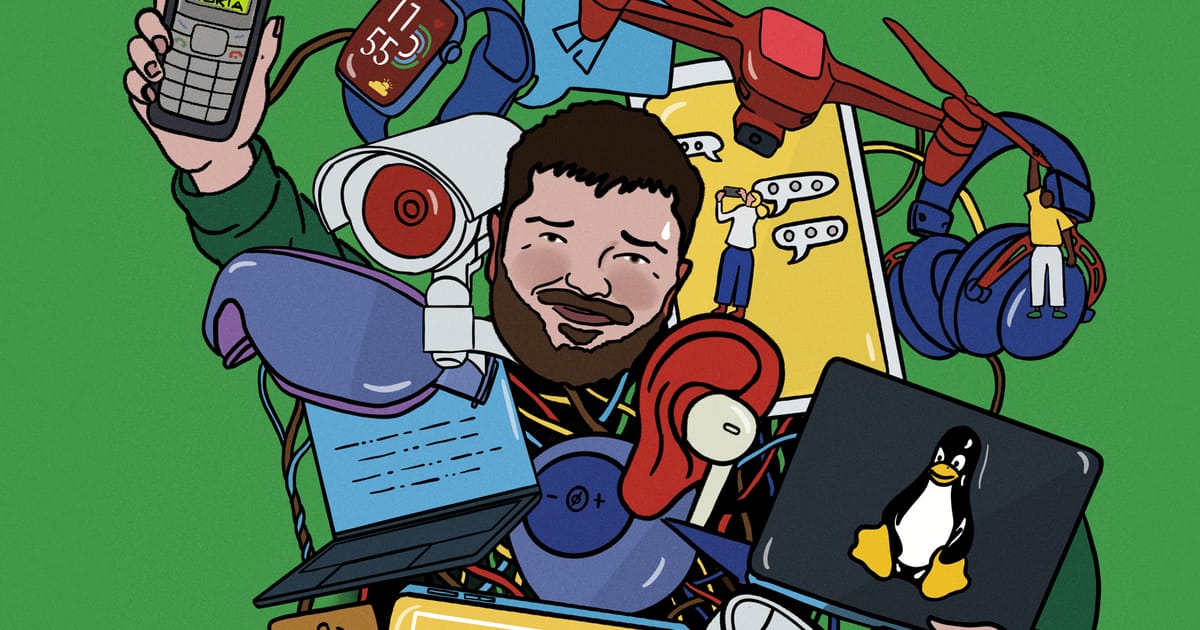
It meant I had to buy everything using cash, which I hadn’t done regularly in ages. Fortunately, unlike in some other European countries, Belgian legislation requires merchants to accept banknotes. The hard part was finding some of those stores without the help of Google Maps, which I’d come to rely on almost as much as my credit cards.
The invisible grip
Swearing off Netflix, Amazon Prime, Disney+ and YouTube was also part of the deal — already eliminating a sizable chunk of my leisure time. But it turned out I could barely watch anything at all, or even properly test European streaming platforms, because my television and tablet both ran on Google software.
Thankfully, an offline Nintendo Switch from Japan, good old books and the legendary Snake game kept me company.
These invisible dependencies run deep. Beyond the products we use every day, U.S. systems often serve as gateways to European companies trying to take on Big Tech.
Take Sweden’s Spotify or the Estonia-based rival to Uber, Bolt. Both still heavily rely on U.S.-controlled app stores, operating systems, payment networks and other digital infrastructure.
And then there is the cloud: the data centers and servers that host websites, process data and route traffic. The vast majority of that market is dominated by Amazon, Microsoft and Google, whose infrastructure supports large parts of Europe’s digital economy.

Europa Monitor is a seasoned News Editor with over a decade of experience in journalism. Known for his editorial expertise and commitment to accuracy, Europa Monitor leads teams to deliver high-quality news content.