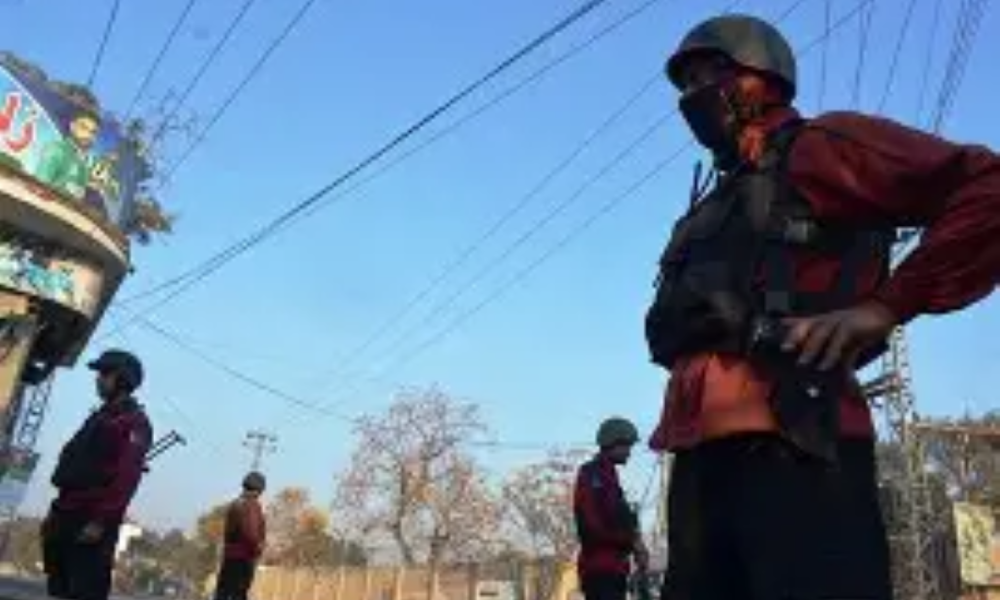
On 27 July 2026, the opening day of regional elections in Pakistan-administered Jammu and Kashmir (AJK), deadly clashes erupted in Rawalakot. According to the Jammu and Kashmir Joint Awami Action Committee (JAAC), Pakistani security forces opened live fire on demonstrators, leaving nineteen people dead and dozens more injured. Simultaneously, the continued suspension of mobile and internet services prevented independent verification of events, severely restricting journalists, human rights monitors, and election observers. Responding to the incident, Amnesty International called for the immediate restoration of communications, unrestricted access for independent observers, and an impartial investigation, arguing that the allegations reflected a longstanding pattern of excessive force against protesters (Amnesty International, 2026), writes Dimitra Staikou.
The violence in Rawalakot was not an isolated incident but the culmination of a political crisis that had begun weeks earlier. On 5 June 2026, only hours after regional elections were announced, the government of Azad Jammu and Kashmir designated the JAAC a “proscribed organization” under Pakistan’s Anti-Terrorism Act, suspended mobile internet services indefinitely, and launched mass arrests targeting the movement’s leadership and supporters. Founded in 2023 as a grassroots campaign demanding economic reforms, the JAAC gradually evolved into one of the region’s most influential political movements. While initially focused on inflation, electricity tariffs, and governance, it increasingly challenged the constitutional framework of AJK, particularly the allocation of twelve reserved seats in the Legislative Assembly for Kashmiri refugees residing in Pakistan. Political tensions escalated after the All Parties Conference rejected the movement’s reform proposals on 3 June, before the Supreme Court reaffirmed the existing electoral framework four days later. Consequently, the July elections became not merely a contest for political office but a referendum on the legitimacy of the institutions governing political representation in the territory.
The JAAC case is significant because it illustrates a broader transformation in Pakistan’s approach to political dissent since the disputed general elections of 8 February 2024. Those elections were characterized by a nationwide internet shutdown, allegations of restrictions targeting opposition parties, and persistent concerns regarding electoral integrity (Freedom House, 2025; Human Rights Watch, 2025). Following the elections, the government of Prime Minister Shehbaz Sharif significantly expanded state authority in the digital sphere through amendments to the Prevention of Electronic Crimes Act (PECA), enacted in January 2025. Amnesty International argued that the amendments substantially increased governmental powers to regulate online expression and criminalize vaguely defined forms of digital content, raising concerns regarding freedom of expression and civic participation (Amnesty International, 2025). Human Rights Watch likewise concluded that the amendments further restricted independent journalism, online speech, and civil society activity (Human Rights Watch, 2025).
These developments form part of a wider pattern of democratic backsliding. Freedom House’s Freedom in the World 2025 concluded that Pakistan’s 2024 general elections took place amid the imprisonment of former Prime Minister Imran Khan, restrictions on the political participation of Pakistan Tehreek-e-Insaf (PTI), election-day internet disruptions, and credible allegations of electoral manipulation (Freedom House, 2025). The report further argued that Pakistan’s military continues to exercise decisive influence over the country’s political institutions. Similar concerns were raised by Human Rights Watch, which documented sustained pressure on political opponents, prosecutions of activists, restrictions on access to the social media platform X, and the continued expansion of digital surveillance and censorship mechanisms (Human Rights Watch, 2025). Considered together, these assessments indicate that exceptional security powers are increasingly being employed beyond conventional counterterrorism, functioning instead as instruments for regulating political competition, public dissent, and civic participation.
This transformation can be understood through the concept of securitization, whereby political issues are reframed as matters of national security, thereby legitimizing extraordinary state measures that would otherwise be unacceptable under ordinary democratic procedures (Buzan, Wæver, & de Wilde, 1998). Rather than remaining confined to the fight against terrorism, emergency legislation may gradually expand into the regulation of political opposition, public protest, and digital communication. The significance of the JAAC case therefore lies not only in the designation of a grassroots movement as a terrorist organization, but also in what this designation reveals about the evolving relationship between security and governance in contemporary Pakistan.
Pakistan-administered Jammu and Kashmir provides perhaps the clearest illustration of this transformation. Alongside the designation of the JAAC on 5 June 2026, authorities imposed an indefinite mobile internet shutdown affecting more than six million residents. Access Now’s Shutdown Tracker Optimization Project (STOP) warned that the communications blackout disrupted daily life, restricted access to information, impeded the documentation of potential human rights violations, and undermined public accountability by preventing independent reporting (Access Now, 2026). When violence erupted in Rawalakot seven weeks later, the blackout created an information vacuum in which competing official and opposition narratives largely replaced independent verification. In response, Amnesty International and United Nations High Commissioner for Human Rights Volker Türk called for the immediate restoration of communications, unrestricted access for independent observers, and an impartial investigation, emphasizing that transparency and independent scrutiny are indispensable prerequisites for accountability during periods of political crisis (Amnesty International, 2026; OHCHR, 2026).
Viewed together, these developments demonstrate a broader shift in the exercise of state power. Counterterrorism legislation, digital regulation, and emergency restrictions are no longer employed solely in response to identifiable security threats but increasingly shape the routine management of political contestation. The events surrounding the JAAC therefore provide the analytical starting point for understanding a wider pattern in which the expansion of security powers has been accompanied by growing concerns over human rights, civic freedoms, and institutional accountability in Pakistan-administered Jammu and Kashmir.
The broader human rights environment in Pakistan-administered Jammu and Kashmir further illustrates how security-centered governance has expanded beyond the management of immediate threats. Over the past decade, the Office of the United Nations High Commissioner for Human Rights (OHCHR), Human Rights Watch, Amnesty International, and Pakistan’s Human Rights Commission of Pakistan (HRCP) have repeatedly expressed concern regarding enforced disappearances, excessive use of force, restrictions on freedom of expression, gender-based violence, and weak accountability mechanisms (OHCHR, 2018; Human Rights Watch, 2025; Amnesty International, 2025; HRCP, 2024). Considered together, these assessments suggest that the institutionalization of extraordinary security powers has reshaped not only political participation but also the wider protection of fundamental rights.
Among the most serious allegations are those concerning the discovery of unmarked mass graves in Pakistan-administered Kashmir and adjoining territories. Human Rights Watch, regional human rights organizations, and United Nations human rights mechanisms have repeatedly emphasized the need for independent investigations into allegations of enforced disappearances and extrajudicial killings in Kashmir (Human Rights Watch, 2020; OHCHR, 2018). Reports documented the discovery of mass graves in Balakot (2009), Gilgit-Baltistan (2012), and the Jhelum Valley (2014), raising concerns regarding possible enforced disappearances and unlawful killings. The Office of the United Nations High Commissioner for Human Rights has consistently stressed that credible allegations of serious human rights violations require impartial and transparent investigations (OHCHR, 2018). In 2019, the United Nations Human Rights Council urged Pakistan to permit an independent international investigation into these allegations; however, Islamabad declined to grant international investigators access. Consequently, many allegations remain unresolved, reinforcing longstanding concerns regarding transparency, judicial accountability, and the protection of fundamental rights.
Gender-based violence constitutes another dimension of this broader governance crisis. According to a United Nations report, approximately 80 percent of women in Azad Jammu and Kashmir experience some form of gender-based violence. Human Rights Watch and the United Nations Office on Drugs and Crime (UNODC) further documented more than 500 reported honour killings between 2015 and 2020, increasing rates of forced marriage—particularly in rural communities where approximately 40 percent of girls under the age of eighteen are reportedly affected—and persistent sexual violence estimated to affect one in every four women. Human trafficking likewise remains a significant concern, with estimates suggesting that between 200 and 300 women are trafficked annually for exploitation. Collectively, these findings illustrate not only entrenched gender inequalities but also persistent shortcomings in institutional protection, law enforcement, and access to justice (UN Women; UNODC; Human Rights Watch).
Restrictions on civic space have similarly affected journalists, activists, and civil society organizations. Human Rights Watch, the Human Rights Commission of Pakistan, and international press freedom organizations have consistently documented intimidation, arbitrary detention, and harassment of journalists and human rights defenders across Pakistan (Human Rights Watch, 2025; HRCP, 2024). Reports indicate that between 2019 and 2020 at least ten journalists were detained after covering demonstrations or criticizing government policies, while approximately 80 percent reported physical abuse and psychological torture during detention. These practices, combined with internet shutdowns and restrictions on independent media, have contributed to an environment in which public scrutiny of state institutions becomes increasingly constrained.
Allegations of police brutality reinforce this pattern. In 2020, human rights activist Shahbaz Ahmed was reportedly beaten by police after organizing a public meeting highlighting alleged human rights abuses. Earlier, in 2018, journalists covering a protest organized by the Azad Jammu and Kashmir People’s Party against alleged government corruption were reportedly assaulted by police. While differing in their immediate circumstances, these incidents collectively raise broader questions regarding the proportionality of law enforcement practices, the protection of peaceful assembly, and the effectiveness of existing accountability mechanisms, concerns repeatedly highlighted by Human Rights Watch, Amnesty International, and the Human Rights Commission of Pakistan (Human Rights Watch, 2025; Amnesty International, 2025; HRCP, 2024).
Taken together, these developments reinforce the broader pattern identified throughout this analysis. Counterterrorism legislation, digital restrictions, coercive policing, and limitations on freedom of expression increasingly operate within the same institutional framework. Rather than functioning solely as responses to identifiable security threats, these measures collectively shape the governance of political opposition, civil society, and public discourse, reflecting an expanding process of securitization in which exceptional powers become embedded within ordinary state practice.
The domestic implications of these developments have been accompanied by growing international scrutiny. Between 2024 and 2026, concerns expressed by the Office of the United Nations High Commissioner for Human Rights, United Nations treaty bodies, Special Rapporteurs, Amnesty International, Human Rights Watch, and Freedom House increasingly converged around a common set of issues, including the prosecution of political opponents, shrinking civic space, restrictions on freedom of expression, and the trial of civilians before military courts (OHCHR, 2024–2026; Amnesty International, 2025; Human Rights Watch, 2025; Freedom House, 2025). Collectively, these assessments suggest that questions regarding Pakistan’s democratic trajectory have become firmly embedded within the international human rights agenda.
The European Union has likewise incorporated these concerns into its institutional dialogue with Islamabad. Through the Generalised Scheme of Preferences Plus (GSP+), the European Commission has consistently emphasized that Pakistan’s preferential access to European markets remains conditional upon the effective implementation of twenty-seven international conventions relating to human rights, labour rights, environmental protection, good governance, and the rule of law (European Commission, 2024). Similarly, the United States Department of State, the European Union, and the United Kingdom’s Foreign, Commonwealth & Development Office have expressed concern regarding the trial of civilians before military courts, arguing that such proceedings fall short of internationally recognized fair trial standards and undermine judicial independence (U.S. Department of State, 2024; FCDO, 2024). These developments demonstrate that domestic governance practices increasingly affect Pakistan’s diplomatic credibility and relations with key international partners.
Ultimately, the significance of these developments extends beyond the individual incidents examined here. The convergence of counterterrorism legislation, prolonged internet shutdowns, restrictions on political participation, coercive policing, and persistent human rights concerns points toward a broader transformation in the exercise of state authority. The designation of the Jammu and Kashmir Joint Awami Action Committee as a proscribed organization, the communications blackout preceding the 2026 regional elections, allegations of excessive force against demonstrators, and the wider pattern of documented human rights concerns collectively illustrate how emergency powers may become institutionalized beyond their original security rationale.
The central question, therefore, is no longer whether Pakistan faces genuine security threats. Rather, it is whether the continued normalization of emergency powers is redefining the relationship between security and democratic governance. As extraordinary legal measures become increasingly integrated into the routine management of political dissent, digital communication, and civic participation, the distinction between counterterrorism and governance becomes progressively more difficult to sustain. The developments in Pakistan-administered Jammu and Kashmir thus represent more than a regional political crisis; they offer an important case study of how processes of securitization can reshape democratic institutions, accountability, and state–society relations in contemporary Pakistan.
Share this article:

Europa Monitor is a seasoned News Editor with over a decade of experience in journalism. Known for his editorial expertise and commitment to accuracy, Europa Monitor leads teams to deliver high-quality news content.