About 13,500 people work for BAE at the shipyard, roughly one-third of Barrow’s working-age population. While that’s a massive expansion from a workforce of 2,900 in 2003, the company still needs to reach 16,500 workers by the end of 2027.
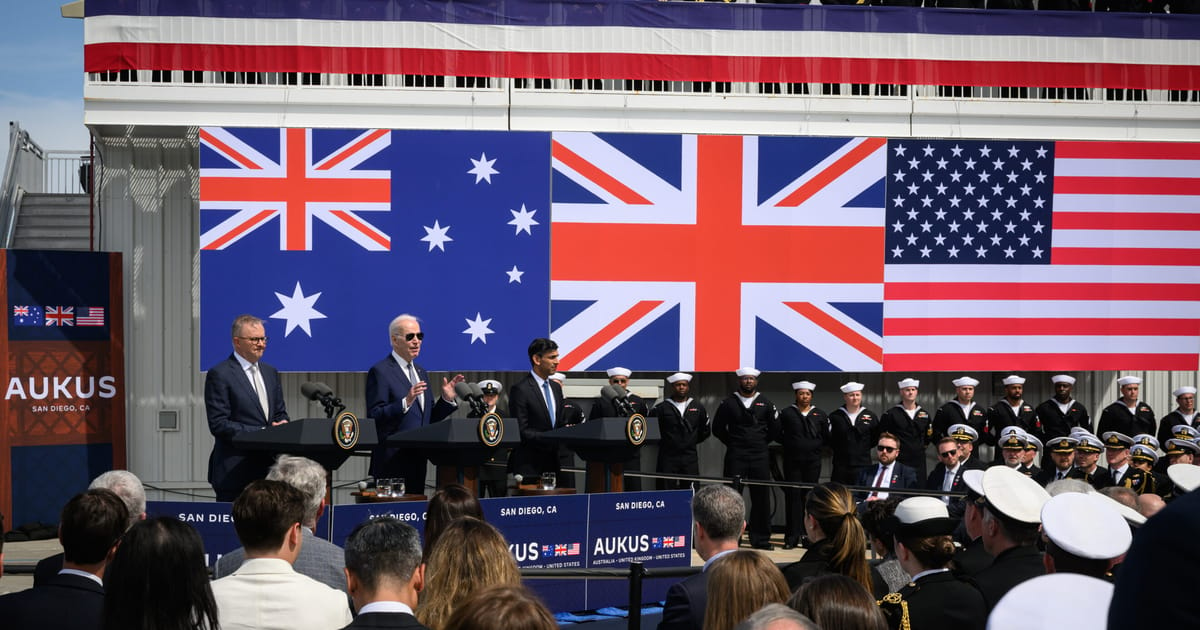
Adding 3,000 jobs in a small town in 18 months is no easy feat. Adding them to achieve what Australia’s Defence Industry Minister Pat Conroy told POLITICO is “the most technically advanced thing in the world,” is even harder.
Conroy has visited Barrow twice and remains optimistic.
Trevor Taylor, director of the Defence, Industries & Society Programme at the RUSI defense think tank, also described the United Kingdom as the least risky part of the AUKUS bargain. Dreadnought and Astute class submarines appear to be emerging without drastic delays, he said.
The unresolved question is experience. “They’ve certainly got the workforce, and I think the infrastructure,” Taylor told POLITICO. “Whether they’ve got the workforce experience is another matter.”
That distinction matters in a nuclear program. Barrow can train welders and other tradespeople. The design engineers, nuclear physicists and systems architects required for SSN-AUKUS will mostly have to be brought in.

Europa Monitor is a seasoned News Editor with over a decade of experience in journalism. Known for his editorial expertise and commitment to accuracy, Europa Monitor leads teams to deliver high-quality news content.